My review of the new album from the “Smashing Pumpkins” is now up here at RELEVANT. It’s a shame the first thing I’ve ever written about this band had to be so unflattering (“Zeitgeist” earns a “C” at best), because this piece certainly doesn’t summarize how I feel about the group as a whole. In an effort to set the record straight …
I never listened to the Pumpkins in their heyday. As seems to always be the case with me and bands I end up loving, I came to them late. This pattern in my musical life stems from being an oldest child, I think—I never had somebody like Patrick Fugit’s sister in “Almost Famous” to set me straight at a young age, so I’ve been playing catch-up ever since. When most people my age were listening to Billy Corgan’s band, I was just discovering The Beatles.
Anyway, I liked the Pumpkins songs I heard on the radio (it seems odd to think of listening to FM now) and the videos played on a seemingly continuous loop on MTV certainly were interesting, but none of it ever got me over the hump to actually buy one of their albums. That didn’t occur until 1999, which just happens to be the year I met my future wife, who just happens to love the Pumpkins. You can do the math: 20-year-old boy wants to talk to girl; boy finds out girl loves Smashing Pumpkins; boy almost immediately buys a Smashing Pumpkins album so he has something to talk about with girl; boy not only likes what he hears, but starts to see the Smashing Pumpkins through the eyes of girl; boy falls in love—with band and girl.
But as I said, I was late to the party. The following year—before I even had a chance to purchase all of their albums—the Pumpkins released “MACHINA: The Machines of God” (which I really liked), went out on tour, and broke up. We (that would be me and the girl) saw them twice in 2000, and that’s what cemented my affection for the band. The first show was on April 18, at Purdue, and it was great. Relatively small venue, excellent seats dead-center in the first row of the balcony, cool setlist, and I even got to shake Corgan’s hand afterward (he was, surprisingly, quite affable, making sure to shake hands with and/or sign autographs for all of the hundred or so people who hung around behind the venue after the show).
Later that year, though, Corgan called it quits and announced the band would play two “farewell” shows in Chicago on Nov. 29 and Dec. 2 at the United Center and the Metro (a small club), respectively. Somehow, miraculously, I pulled a pair of tickets to the UC show—they were almost at the roof of the building, but at least they were right alongside the stage. And, really, I didn’t care because the show sold out literally in like five minutes, so I was just thrilled to be allowed in the building.
That night the Pumpkins played one of the best concerts I have ever attended. It started with a six-song acoustic set, then Corgan dashed offstage, changed from an all-white outfit to an all-black getup, and let loose with guitars blazing for the remainder of the night. The final tally ended up about three hours long, two main sets and three encores, and 27 songs. That show, along with the Pearl Jam set from less than two months earlier that still stands to this day as the top live music experience of my life, cemented Chicago as my second musical home and made me a Pumpkins fan for life.
The odd thing is, because that show meant essentially the end of the band, it was hard to keep the fire burning. After the glow of that night wore off in a few months, I moved on to other things; that happens, I guess, in the aftermath of a dissolved band. But because I knew them for so short a time, I never quite got to that obsessive, buy-everything-they’ve-ever-recorded-and-listen-to-them-all-the-time fever pitch I’ve had with so many other groups. In fact, until this past weekend, I’m ashamed to admit I’d never actually listened to the Pumpkins’ renowned debut album, “Gish,” all the way through.
So that brings me back around to the original point of this little missive. I wish Corgan had left well enough alone and not called “Zeitgeist” a “Pumpkins” album, because it doesn’t really feel like one at all. But one good thing has come of it: Preparing to write the aforementioned review forced me to go back and listen to the band again for the first time in a long while, and it reminded me of how great they were, how much I loved (and still love) their music, and the role their songs played in my life. There’s a lot to be said for that, and nothing Corgan does now is going to taint it or take it away. I only hope he comes to his senses and either invites James back into the band, or drops the Pumpkins moniker once again. Or, at the least, get back to writing the type of songs that made everybody love his music in the first place.
With that in mind, here are my 10 favorite Smashing Pumpkins songs, in order:
1. Muzzle, from 1995’s Mellon Collie and the Infinite Sadness
2. Mayonaise, from 1993’s Siamese Dream
3. Drown, from 1992’s Singles soundtrack
4. Stand Inside Your Love, from 2000’s MACHINA
5. Untitled, from 2001’s Rotten Apples greatest hits collection
6. The Everlasting Gaze, from 2000’s MACHINA
7. Landslide, from 1994’s Pisces Iscariot (Fleetwood Mac cover)
8. Ava Adore, from 1998’s Adore
9. Frail and Bedazzled, from 1994’s Pisces Iscariot
10. Blew Away, from 1994’s Pisces Iscariot
Thursday, July 26, 2007


Monday, July 16, 2007
The White Stripes, 'Icky Thump'
You can find my review of the new White Stripes album, "Icky Thump," over here at RELEVANTmagazine.com. It's an "A."
‘Harry Potter and the Order of the Phoenix’

For any who may be disappointed with the 2007 crop of summer movies, I give you … “Harry Potter and the Order of the Phoenix,” not just the best movie of the season, but the best of this franchise, as well.
The fifth installment of author J.K. Rowling’s magical (in more ways than one) seven-part series, “Phoenix” covers the darkest subject matter yet, which makes it ideal for a more adult audience. This is the first film in the franchise that someone could walk in off the street without having seen/read any of the previous chapters and still really enjoy. The movie, obviously with a lot of help from the source material, has it all: Action, adventure, wit, charm, humor, emotion. It’s the story of a boy who finally embraces his talents and his destiny, and in so doing takes his first step into manhood. For the first time, the now 15-year-old Harry doesn’t stumble through challenges using his previous concoction of raw power, big heart, and seemingly blind luck; in “Phoenix” he takes command not only of his own skills, but helps his young classmates harness theirs, too. After watching this kid suffer under the weight of being “The Boy Who Lived” for four years, it’s thrilling and emotionally rewarding to finally see him believe in himself.
“Phoenix” is helmed by relative newcomer David Yates, a 44-year-old Englishman with a mix of TV and film work in his background, and none of it anything most people have ever seen. Thus this film marks a rather stunning big-budget debut, especially considering he trimmed Rowling’s longest novel into the franchise’s shortest movie (“Phoenix” clocks in at a relatively short 2:18). I have nothing to offer most of you out there in the way of changes from the source material, however, as I choose to see the movies first and then read the books later. From my perspective, screenwriter Michael Goldenberg (“Contact”) did a masterful job with his condensed version; the plot moves well and all elements are explained to satisfaction. For someone who didn’t know what was coming, the dynamic story moved along with no sluggishness whatsoever.
And, wow, am I glad I didn’t know what was in store. Rowling has provided some great climaxes in this series, especially in the previous two chapters, but “Phoenix” certainly boasts the best yet. Gates translates the written word into a visual tour de force that I would put up against any of the special-effects-laden cinematic clashes of the past decade.
I could barely get through the first two “Potter” movies, but looking back I must give Christopher Columbus, who directed those installments, a great deal of credit for handling the most important job of them all: casting this crew. I cannot imagine anyone at this point other than Daniel Radcliffe (Harry), Emma Watson (Hermione), and Rupert Grint (Ron) in the lead roles; all three continue to just get better with each movie. The supporting cast is equally superb, especially Alan Rickman as the not-so-sinister-anymore Professor Snape. Gary Oldman, a true chameleon, continues his excellent work as Harry’s godfather, Sirius Black (can you believe this is the same guy who played James Gordon in “Batman Begins”?). And Imelda Staunton steals every scene as buttoned-up professor-turned-Hogwarts-dictator Dolores Umbridge.
I really can’t say enough good things about this movie. It’s utterly captivating, exciting, infuriating (in all the right ways, especially its commentary on government-run education), uplifting, heartwarming, and tear-inducing. It’s the first movie I’ve seen this summer that I wanted to get right back in line and watch again.
And, for what it’s worth, I saw it with two people who HAVE read the books (and whose opinions I respect), and they loved it just as much as me.
Grade: A
Thursday, July 05, 2007
‘Transformers’

Never send a Bay to do a man’s job.
Seriously: How does director Michael Bay keep getting such high-profile gigs? There is so much to love about his latest movie, “Transformers,” until the end when he can’t help but blow everything up the way he has in every other movie he’s made. Maybe it’s fitting, though, that a story about toys was made by a guy who treats filmmaking like playing with them.
I know not to take “Transformers” too seriously. I know it’s just a summer action pic. But I can’t help but wonder what could have been had ANYONE but Michael Bay been at the helm. Because this flick is pretty stinkin’ good for the first, oh, hour and a half. Credit screenwriters Roberto Orci and Alex Kurtzman, two “Alias” alums, for elevating the story beyond just big robots bashing one another.
And wow, speaking of those robots, it’s the Transformers themselves who save this movie. They are, in a word, awesome. My hat’s off to George Lucas’ special effects company, Industrial Light & Magic, for turning ’80s cartoon icons into 21st century visions of wonder. They are something to behold, especially when transforming from vehicle to robot while on the move. The Transformers make this venture worth watching.
But then Bay obviously steps in and leaves his “mark,” meaning a nonsensical conclusion featuring explosion after explosion after explosion, all of them lacking anything close to a point. Throw in a few cheesy lines of dialogue and—wrap! There’s a way to do spectacle with class—think Peter Jackson, Ridley Scott, or Sam Raimi—where the action has an ebb and flow and, shockingly, moments of quiet. Bay heeds none of this; he’s like a monkey throwing his own crap at the screen. He basically wastes the evil character Megatron, and what should have been an epic fight between the Decepticon leader and noble Optimus Prime barely registers amongst the chaos.
That’s just the last half-hour or so, though. The rest of the movie is good enough to make it worthwhile, especially to see Prime and his fellow Autobots in all their gleaming metal glory. It’s just a shame these beloved characters were entrusted to such a clod who certainly has nothing more to offer than meets the eye.
Grade: B-
Wednesday, July 04, 2007
‘Ratatouille’

The geniuses at Pixar have built their company’s reputation on many hallmarks, but perhaps the most important is their ability to take us into other worlds. Over the past 12 years we’ve gone under the sea, under the earth, and into the toy box. We’ve explored realms run by monsters and saved by superheroes, and we’ve seen our beautiful country through the eyes of cars. And now … rats?
Believe me when I tell you: The studio’s latest near-masterpiece, “Ratatouille,” is the ballsiest endeavor its ever attempted.
In an industry driven to tears and fears by the bottom line, it’s amazing an idea for a movie about nature’s ugly little scavengers was even discussed, much less made, and much less by two companies—Disney and Pixar—whose stock and trade is cute. But only the guys at Pixar (did I mention they’re geniuses?) could pull something like this off. In “Ratatouille,” writer/director Brad Bird (“The Incredibles”) accomplishes the impossible—he makes us care about rats.
First and foremost, this movie is flat-out hilarious. It takes a little bit to really get going (pacing is a problem throughout), but once little Remy the rat makes his way to Paris and meets up with fellow (although human) garbage boy Linguini, things really start cooking. Linguini yearns to be a chef, but finds himself in the unfortunate circumstance of having no talent; Remy, on the other hand, also yearns to be a chef but finds himself in the unfortunate circumstance of being, well, a rat. Rat and food—they don’t exactly go together like peas and carrots.
As you’ve no doubt seen from the trailer, Remy and Linguini work out a system whereby the rodent communicates his culinary commands by pulling on Linguini’s hair. But this certainly isn’t one of those times when the best scenes are used in the preview. Far from it. The training montage is rib-popping funny, as is any time the rats are discovered (think of that scene in “Little Mermaid” where Sebastian the crab is discovered in the kitchen, only even funnier).
“Ratatouille” is Pixar’s eighth full-length film, and as has become tradition the studio improves its craft with each outing. The scenery in last year’s “Cars” was stunning, but “Ratatouille” is even better, especially in the backgrounds—there are times when you’ll swear these animated characters have been superimposed on the real Paris. “Camera”-work is also spectacular, as Bird effectively switches between rat and human perspectives; it feels like you’re the one sitting on Linguini’s head.
This is without question Pixar’s most adult-oriented film. It deals with themes of deceit, ego, loyalty, the work-vs.-family dynamic, and even children out of wedlock, just to name a few. There is plenty of slapstick humor to keep the kiddies entertained, but there are also long sections without a whole lot of yuks—fine for adults, but kids might wander off. It feels a shade long at 110 minutes, as Linguini and Remy have one too many falling outs/reconciliations.
Still, “Ratatouille” ends on such a high note and with a series of unexpected twists, I can certainly understand the rumors of nationwide applause after screenings. Nobody makes movies of more consistent quality than Pixar, and Bird in particular seems to be the studio’s master chef.
Grade: A-
Other movies I’ve seen so far this summer:
“Ocean’s Thirteen”
You certainly can’t say George Clooney, Steven Soderbergh & Co. don’t learn from their mistakes. After the mish-mash train wreck that was 2004’s “Ocean’s Twelve,” the crew of lovable scoundrels returned this summer with a back-to-basics approach with “Ocean’s Thirteen” that made the 2001 original (itself a remake) such a charmer.
The boys are (thankfully) back in Vegas this time around with more revenge on their minds, as they’re out to ruin a new venture by casino mogul Willie Bank (a slimy little man played winningly by Al Pacino in a very un-Pacino sniveling performance), who screwed over the crew’s mentor, Reuben. After going through the motions in the predecessor, Clooney, Brad Pitt, Matt Damon and all the rest are back on their games here. Damon is especially good, playing up the visual comedy of his enlarged prosthetic nose (the Nose plays!).
By its very nature a sequel in this series will suffer because we already know how clever and cool this crew is and don’t get the pleasure of discovery as we did in “Eleven.” But a streamlined script and—what’s this?—a bit of a heart, makes “Thirteen” a winner.
Grade: B+
“Fantastic Four: Rise of the Silver Surfer”
I guess the best thing I can say about this superhero flick is that it was better than I thought it would be.
With this sequel, director Tim Story (“Barbershop”) and writers Don Payne and Mark Frost went for a comic book movie for the whole family, which is refreshing in a way. It’s nice to see superheroes who actually enjoy their powers, as opposed to the tortured souls who populate basically every other comic book adaptation since 1989’s “Batman.” This tone leads to some witty banter between the Human Torch (Chris Evans, who could pass for Chris O’Donnell’s brother) and The Thing (a fun turn by Michael Chiklis), but doesn’t leave much room for a gripping story (the movie hustles along in just 92 minutes).
The Silver Surfer (voiced by Laurence Fishburne) is undeniably cool, and I could be convinced to go see a spinoff featuring just him, which is probably in the works. But he’s balanced by the utter lack of chemistry between Jessica Alba’s Invisible Woman and Ioan Gruffudd’s Mr. Fantastic, whose scenes fall utterly flat throughout.
Still, for those after a whimsical, blow-’em-up adventure fueled by superpowers, “Rise of the Silver Surfer” adequately fits the bill.
Grade: C
Thursday, June 14, 2007
Meeting the Man Who Created Bauer
I never intended my tiny corner of the Internet to be a traditional blog, but occasionally things occur in my life that force me to make an exception. This week was one of those times.
On Wednesday morning, I was on assignment at Six Flags Great America in Gurnee, Illinois, a suburb of Chicago. The objective: To interview Joel Surnow, co-creator of “24,” who has produced a stunt show for the amusement park making its debut this week.
This was an absolute dream-come-true situation. Not only is Surnow responsible for one of my favorite TV shows of all time, but he’s also a conservative, which by default makes him one of the gutsiest guys in Hollywood and one of my personal … “hero” isn’t the right word, but let’s just say I admire him a great deal for being a stranger in a strange land.
This was, as you might expect, a personal thrill and one of the highlights of my professional career to this point, but I tried not to get my hopes up; meeting famous people you respect from afar is a dangerous thing—if they turn out to be jerks, that encounter can cause a huge backdraft.
If, however, the guy turns out to be even cooler than you could have possibly hoped … well, it just doesn’t get better than that.
When I arrived at the park around 7:30 Wednesday morning, Surnow was already at the stunt show amphitheater, waiting for a live shot with a local Fox station scheduled for 8 a.m. Just by the way he was handling himself, I started to get a good vibe—he was talking casually with the actors/stuntmen in the show, taking pictures with them and looking generally congenial. I took that as a good sign.
After the live TV interview, I got my shot. I didn’t know what to expect—some bigwigs can make you feel like they’re doing you a favor by granting a five-minute interview. But Surnow was totally laid back and generous with his time. I think it may have helped that I introduced myself as not just a “24” fan, but a conservative as well. He seemed to light up a bit at that, letting out a big “duuuude!” (I kid you not). We talked about the new stunt show, “Operation SpyGirl,” for about six and a half minutes, and he answered all of my questions thoughtfully and completely.
I then asked one last question: What’s up with the “reinvented” “24”? He said—with a big just-you-wait grin on his face—next year is “going to be wild, it’s going to be amazing,” and “not like any season we’ve done before.” He said Day 7 will break some of the show’s own rules, go to other locales besides L.A., and have “a whole new look.”
So, with that excellent reply under my belt, I was ready to get out of his hair—and I told him as much. But he said he didn’t have anything to do just then, so we just kept on talking for five more minutes or so, about all sorts of issues: conservatives in Hollywood, global warming, the 2008 presidential election, and he even asked me what I thought of the finale of “The Sopranos.” Joel Surnow, asking ME what I thought of a major television event. I was stunned.
I know this whole thing sounds ridiculously gushy, but I don’t care. Pretty soon another reporter came up seeking an interview, ending our conversation, but I couldn’t have asked for a better experience. Surnow was the exact opposite of what you would think the typical Hollywood bigshot would be like, and it makes me respect him even more. He could have just gone through the motions to get me out of his face, but this was a real, live conversation, not just some canned answers. He was actually listening to what I had to say and responding to it.
I’m on the record that Day 6 of “24” was certainly the weakest of the series’ seasons, but I’m pumped to see what this guy can come up with for Day 7. And regardless, those 15 minutes justified for me all the time and money and emotion I’ve invested in his show. After getting to meet the man behind “24” and have that encounter be such an amazingly positive experience, I’m in it for the long haul, come hell, high water, or the occasional misguided plot twist. Surnow has said in previous interviews that as soon as “24” flops, they’ll run him out of Hollywood. Well, I now have confirmation for what I always thought/hoped: He’s worth rooting for.
***As a side note, I got to hang around after the interview for a “SpyGirl” dress rehearsal. It was the first time Surnow saw the show start-to-finish, so it was fascinating to watch him get down to business, Jack Bauer-style. He was as nice as he could be while everyone was meandering around that morning, but as soon as the rehearsal was over, he got down to business, and fast—no screwing around.***
Monday, June 04, 2007
Wilco, 'Sky Blue Sky'
My review of Wilco's new album, "Sky Blue Sky," is now up on RELEVANT here. I'd say it's a solid "B" effort.
Monday, May 28, 2007
‘Pirates of the Caribbean: At World’s End’

“Pirates of the Caribbean: At World’s End” is everything the critics say: It’s long, complicated, and sometimes hard to follow.
Oh, and it’s one thing they say it’s not: Terrific.
I don’t understand all the haranguing about how complex this movie is. Aren’t the people complaining the same critics who moan incessantly about how dumb summer movies typically are? Yes, as the third installment in the insanely successful “Pirates” trilogy, “At World’s End” has a lot of heavy lifting to do to wrap everything up. Usually this means long sequences of exposition (see “Spider-Man 3”), but “Pirates 3” bounces along with only rare moments of flagging intensity. What puts this movie over the top is its investment in characters. Much credit is due screenwriters Ted Elliott and Terry Rossio, because all the major players—and there are several—have their own arcs and depth.
Part of the problem with last year’s “Dead Man’s Chest” stemmed from the fact that it was basically just half a movie. The myriad plotlines established in that film are wrapped up here, and not in some ham-fisted, oh-crap-we’re-running-out-of-time way. Yes, this movie may be almost three hours long, but if that’s what it takes for this kind of storytelling, so be it. Everything starts to come together about halfway through “At World’s End,” and it’s great fun to see it all weave together. This should make “Dead Man’s Chest” more rewatchable than before.
And story aside, “At World’s End” is an absolute stunner when it comes to action and visuals. Where the second film focused more on mano y mano swordplay, the conclusion ramps back up on the epic seafaring battles from the first film, 2003’s “The Curse of the Black Pearl.” There is action throughout, but the final hour is a nonstop, eye-popping battle royale on the swirling open water.
Once again Johnny Depp anchors the entire show with his squirrelly Jack Sparrow, as brilliant, funny, and captivating as ever (yes, he’s back from the dead—did you really think he wouldn’t be?). The movie benefits, though, from the return of Geoffrey Rush as Captain Barbossa, Sparrow’s arch-enemy. The two must unite to face not just Davy Jones (played with continual quiet dignity by Bill Nighy), but the entire East India Trading Co. Kiera Knightley and Orlando Bloom, meanwhile, give their best performances of the series as star-crossed lovers Elizabeth Swann and Will Turner, and Keith Richards saunters onscreen for a fabulous cameo.
Depp says one of his goals in doing these popcorn flicks was an attempt to buck the system from the inside for a change. With “Pirates 3,” he comes as close as any one actor can with a big dumb action movie that actually does have a brain, charm, wit, humor, and heart. It’s not like he and director Gore Verbinski set out to make “Apocalypse Now”—but here they have their cake and eat it, too. Really, what other leading man in Hollywood could squeeze a trippy, lengthy hallucination sequence into a big-budget Disney flick—and make it work?
Remember, this franchise is based on an amusement park ride, not a Shakespeare play. The fact that it even exists is amazing. The fact that it doesn’t suck is admirable. The fact that it’s this good makes it a real summertime treasure.
Grade: A-
Oh, and one more thing: Stick around to the end of the credits. You won’t regret it.
Tuesday, May 22, 2007
‘A Tale of Two Finales,’ or How, at the Last Minute, Jack Bauer Reared Up and Beat the Crap Out of Those Wimps from ‘Heroes’
***Insert Your Own Spoiler Warning Here***
Since the sixth season of “24” premiered in January opposite NBC’s freshman breakout hit “Heroes,” the two shows have been duking it out for fans and ratings the rest of the season. Why the respective networks would pit two shows against one another that so obviously draw from a similar audience pool I don’t understand, but “24” certainly lost the overall war—both in critical acclaim and popularity.
But at least Jack Bauer went out swinging.
As chronicled here and basically every other entertainment-related web site in the world, Day 6 of “24”—for the most part—sucked. “Heroes,” on the other hand, slowly unveiled what promised to be an excellent storyline, including a series of captivating episodes in January and February, just as “24” was starting to slide. It left off with a climactic confrontation between the main good-guy, Peter Petrelli, and main bad-guy, Sylar, with the latter holding the former in a literally head-splitting vice grip of death. “Heroes” had been perfectly paced up until this point, answering questions with enough frequency to stem frustration while at the same time investing valuable screen time in establishing and developing its wide array of characters.
Unfortunately, “Heroes” creator Tim Kring, a veteran of episodic television (most notably “Crossing Jordan”), apparently took on way more than he could handle with the monster hit he so painstakingly created. “Heroes” took a seven-week break in preparation for its stretch run that culminated in Monday night’s finale, “How to Stop an Exploding Man,” and the time away was not kind. Upon returning five weeks ago, it almost didn’t feel like the same show. Kring had established the ubiquitous “Save the cheerleader, save the world” tagline, but when it came to actually saving the world, he couldn’t quite figure out how to do it.
Instead, we were left with one big freight train of a plot barreling nearly out of control toward a conclusion, as “Heroes” rushed its way to a chunky, choppy, unwieldy final hour in which all its characters seemed to be slammed together by the flimsiest of threads—even for a comic-book style story. Almost every major character on the show, in fact, was reduced to little more than facilitating the plot, and the much-hyped battle between Peter and Sylar ended up being little more than a bar-fight tussle.
In one rather innovative touch, the final couple minutes of Monday’s episode actually began “Volume Two.” However, by the time Hiro found himself in 17th-century Japan, I was having trouble coming up with a reason to keep watching this show next season.
The real action Monday night, it turns out, was over on “24,” which rebounded rather nicely in its last two hours of Day 6.
A few weeks back, “24” producer/writer Howard Gordon—in a refreshing admission of guilt—acknowledged complaints about this season are legitimate, and promised a “reinvention” for next year. That certainly was music to most fans’ ears, but I was still concerned: The myriad strained plotlines of Day 6 had so fouled up the show, I hoped the writers would completely cut the cord on this season. I didn’t want a traditional cliffhanger, because I feared any significant loose ends needing to be dealt with in Day 7 would act like a cancer that would eat its way through the show and, ultimately, kill it prematurely.
Thankfully, I got my wish (basically).
Looking back, I still don’t know exactly how they did it in just two hours, but the “24” production team managed to kill Jack’s dad, capture Jack’s former captor/torturer, recover a nuclear component, and curtail World War III. Oh, and give Chloe a baby (big mistake). And it was pretty compelling—if there’s one thing the team never forgot this season, it was how to stage exciting action sequences.
On top of that, they also made room for Kiefer Sutherland to deliver one of his best scenes in the history of the series. In the final act of hour 24, Jack slipped into the home of former Secretary of Defense James Heller (played by one of “24’s” all-time greats, William Devane) in search of Heller’s daughter, Audrey, who Jack loves “with all his heart.” Finally, Jack was able to unleash a portion of the pent-up rage he’s been carrying for years spent sacrificing for a government who has taken nearly every opportunity to throw its loyal special agent to the wolves. Yet, in true “24” excellence, the show didn’t allow Jack complete immunity. Heller came right back at Jack, correctly asserting that Agent Bauer will never be able fully “retire,” and thus Audrey will never really be out of harm’s way. Jack, to his credit, really and truly heard Heller’s plea/command, and said his final farewell to his near-comatose beloved.
That sound you heard was the last cord splitting.
We left Jack standing out on Heller’s seaside balcony, presumably pondering what in the world he’s going to do now. The writers are probably wondering the same thing, but at least they set up a relatively blank canvas for next season (the only holdover I’d like to see is the fabulous Peter MacNicol as Tom Lennox, who after a sluggish start became the go-to guy of the day’s second half).
Monday’s “24” finale certainly wasn’t good enough to wash away the stigma of Day 6. Only a supreme effort next year will return this series anywhere close to its Emmy-winning form, but one subpar season is acceptable in the long run, providing the show recovers. I’m certainly willing to give this group the benefit of the doubt. They’ve earned it.
Tim Kring’s heroes, on the other hand, have not.
Friday, May 18, 2007
‘Pearl Jam’: One Year Gone
A year ago, I posted my review of Pearl Jam’s self-titled eighth studio album, otherwise known as “Avocado.” At the end of that opus, I asked a handful of questions that could only be answered with time. Now that a year has passed, I thought I’d go back and respond to those ruminations, because my love for this album has not diminished at all with time.
I’ll take the unanswered questions in reverse order:
1. “Will it fade into mediocrity with time like ‘Riot Act’”?
This is probably the easiest. In a word: No. A year later, I can still put this CD in at any time and enjoy it almost as much as the first time I heard it. Some of the songs may have dimmed slightly now that the flush of new Pearl Jam is gone (I’m thinking specifically of “Comatose” and “Marker in the Sand”), but others gained strength (“Parachutes” and “Worldwide Suicide”) with repeated listens and context. Overall “Avocado” stands firm on the quality of its songs. “Riot Act” does not.
2. “Will its uptempo rockers still get the blood flowing like ‘Vitalogy’”?
Absolutely. As a group, the opening stretch from “Life Wasted” to “Marker” remains as good a five-song run as the band has ever recorded. My recommendation: Go find a live version of “Life Wasted” that includes Mike McCready’s scorching song-closing solo that was criminally faded out on the album.
3. “Will its more experimental moments still sound good a decade later like ‘No Code’”?
Okay, so this one technically is still unanswerable, but I’ll refer again to the lilting “Parachutes” as a song that’s improved in the interim, while the intro to “Severed Hand,” the multi-tracked vocal on “Unemployable,” and the structure of “Inside Job” remain as thrilling as ever.
4. “Will it prove to have the perfect trifecta of ‘Given to Fly,’ ‘Do the Evolution,’ and ‘In Hiding’ like ‘Yield’”?
Unfortunately, no. Those three songs really are perfection in triplicate and remain in my “Pearl Jam Top 10.” “Life Wasted” is the only song off “Avocado” to crack that difficult list, but were I to extend the criteria to, say, 25, “Pearl Jam” would be well represented—“Severed Hand,” “Unemployable,” “Come Back,” and “Inside Job” would all make the cut. Which leads to my final question …
5. “Where will ‘Pearl Jam’ rank in the group’s deep catalog”?
This is certainly the toughest question, largely because ranking Pearl Jam’s albums is nearly impossible (other than “Riot Act” landing soundly at the bottom of the list) due to my emotional connection to each of them. As a whole, though, I now rank “Avocado” at the top of the list. On a track-by-track basis it may not have as many “classics” as previous efforts, but top to bottom, front to back, it's stronger and flows better than any other record in the repertoire. There are no weak entries (even “Army Reserve” has grown on me somewhat), and the collective feeling of satisfaction from this album is unmatched by any of the other seven. When I need a burst of energy to meet a deadline, or company on a road trip, or just 50 minutes of great music, “Avocado” fits the bill. If Pearl Jam never recorded another album, this record would be a fitting and fulfilling conclusion to a fantastic career.
So, that said, it’s time to do the impossible: Here’s how PJ’s albums shake out on my list, along with my 10 favorite songs:
ALBUMS
Avocado
Yield
Vitalogy
No Code
Ten
Binaural
Vs.
Riot Act
SONGS (in no particular order, and subject to change at any time)
Corduroy
Do the Evolution
Given to Fly
Hard to Imagine
In Hiding
Life Wasted
Porch
Release
Sad
Wash
THE NEXT 15
Alive
Betterman
Come Back
Grievance
Immortality
In My Tree
Inside Job
Insignificance
Long Road
Not For You
Off He Goes
Present Tense
Severed Hand
Spin the Black Circle
Unemployable
Sunday, May 06, 2007
‘Spider-Man 3’

In the wake of the record-smashing opening weekend for “Spider-Man 3,” it will be interesting to see if the wall-crawler’s financial web is strong enough to bring the band back together again for one more go-round.
If a fourth-quel does occur, that would actually be a shame in one sense, because the flaws in “Spider-Man 3” all stem from writer/director Sam Raimi’s seeming attempt to get all his big ideas down on film before momentum finally washed the Spider out.
Throughout the production process and pre-release media campaign for the third installment in this elite blockbuster franchise, much of the hype has centered on “will this be the last one?”—at least as presently constituted with Tobey Maguire donning the red-and-blue (and sometimes black) tights and Raimi at the helm of what some say was the most expensive film ever made. Even though everyone involved in these movies has made a gazillion dollars—the original “Spider-Man” opened in 2002 with a then-record $114 million and went on to gross more than $400 million domestically, while the 2004 sequel finished at $373 million—it’s not hard to imagine a scenario where they all just get sick of it. These productions are just a tad more complicated and grueling to film than, say, “Wonder Boys.”
With the anvil of collective artistic burnout hanging over his head, “Spider-Man 3” feels like Raimi tried to jam two movies into one; the individual parts are excellent, but together they become somewhat ponderous. Back when Topher Grace (Eric from “That ’70’s Show”) was cast as Peter’s arch-rival Eddie Brock/Venom, the original plot rumors implied his character would merely be introduced in this film while Peter handled some other baddie, leaving the classic Spidey-Venom clash for No. 4. If those rumors aren’t true, fine, but it sure seems like Raimi had to shoehorn Venom into No. 3 just to make sure he actually got the comic-book icon onscreen.
There are four—count ’em FOUR—major storylines running through “Spider-Man 3”: Peter’s ongoing romance with Mary Jane (played pitch-perfect once again by Kirsten Dunst) and the tension his time-intensive crime-stopping hijinx puts on their relationship; Peter/Spidey’s ongoing feud with best friend and son of the dead-since-No. 1 Green Goblin, Harry Osborn (played once again by James Franco, who stepped up big time this round with his best performance by far); Spidey vs. The Sandman (featuring a pleasantly surprising grounded turn by Thomas Haden Church) which also holds implications for plot threads tracing back to No. 1; and Spidey vs. The Symbiote vs. Eddie Brock/Venom (in other words, the totally-wicked fight we’ve all been waiting for). Whew, I’m tired just typing all that. And, yes, it’s a whole lot to squeeze into one movie, even one that runs nearly two and a half hours.
To their credit, Raimi and co-writers Ivan Raimi and Alvin Sargent weave all of these plots together rather well, as Peter’s motivations throughout the film bounce from one thread to another with absolute sincerity. It still comes off as somewhat choppy and workmanlike, though, because there’s just too stinkin’ much going on. All these necessary plot points lead to a serious amount of exposition to get all this heavy story-lifting accomplished. On first impression, there is way too much dialogue in this movie (an unusual complaint for a summer blockbuster, I know).
For my money, “Spider-Man 2” is the best comic-book adaptation of all time and one of the best action/adventure movies ever. It set the template for “Batman Begins” and every superhero movie to come (every one worth anything, anyway) by focusing more on Peter Parker than his high-flying alter ego. “Spider-Man 2” struck the perfect balance between real human drama and out-of-this-world heroics, and demonstrated how the former fueled the latter. Unfortunately, “Spider-Man 3” actually goes too far in Peter’s direction; I can’t believe I’m actually saying this, but there simply isn’t enough Spider-Man in this movie.
Because, wow, when the web-slinger is unleashed in all his glory, it’s absolutely electricfying. We’ve become so drunk on special-effects laden action in the post-“Matrix” era (see “X-Men 3”), I didn’t think it was possible to really and truly make my jaw drop anymore. But EVERY SINGLE ACTION SCENE in “Spider-Man 3” is a home run. From Peter’s initial sans-costume mid-air fight with Harry (which everyone by now has seen on TV or the Internet) to the no-holds-barred climactic battle royale, Raimi and cinematographer Bill Pope never miss with eye-popping, mind-blowing, make-you-say-“Whoa!” action. Spider-Man pulls some maneuvers in this film that leave the choreography from the first two in the dust. All this breathtaking swingin’-and-clobberin’ is worth the price of admission on its own—you need to see this movie on a big screen. The special effects are once again improved, too, as there isn’t one scene that didn’t look absolutely genuine (just wait ’til you get your first good looks at Sandman and Venom!).
Raimi also injects some of his own off-the-wall humor into the third segment, too, which provides some lighter moments in what is overall a rather dark film. As has become tradition, J.K. Simmons steals every scene as gruff Daily Bugle editor J. Jonah Jameson, and there are several laugh-out-loud moments when Peter starts getting his inner “cool” on (a geek is a geek is a geek, even if he does have a supersuit from outer space). Every other major actor carries their weight well—Maguire was obviously born to play this role and seems to relish getting to play around in Spidey’s dark side for a while.
So from a technical standpoint, “Spider-Man 3” is a flawless exercise in big-budget filmmaking and sets the summer movie season off with a great start—if “Pirates 3,” et al can run with this baton, we should be in for a pretty good few months. It’s just too bad that as a devoted Spidey fanboy, Raimi couldn’t bring his personal Spider-Man saga—and now undoubtedly the best set of superhero movies of all time, despite its minor flaws—to the perfectly fulfilling conclusion he so obviously desired and envisioned. Like Peter Parker grasping for the engagement ring dangling just beyond his outstretched hand, this is a woulda-shoulda-coulda near-miss masterpiece.
Grade: B+
Saturday, May 05, 2007
Arctic Monkeys, 'Favourite Worst Nightmare'
After a lengthy hiatus, I'm back reviewing records for RELEVANT. You can find my Arctic Monkeys write-up here. It's definitely an "A" album.
In the next several weeks I'm scheduled to cover new stuff by Wilco (they're streaming the entire album, "Sky Blue Sky," over at the official site, and it's becoming increasingly difficult to hold out for one more week until it hits stores May 15—I'm a no-leaks guy, in general, even if it is straight from the source—first impressions are very important, especially for highly-anticipated albums, and I don't want my first impression of this one to be through a computer), The White Stripes (wow, lead single/title track "Icky Thump" sounds like a welcome return to form), and The Smashing Pumpkins (I'm just hoping it doesn't suck).
Also, don't forget Ryan Adams has a new CD coming out soon (early June, I think), and the new Yeah Yeah Yeahs track "Sealings," which was just released as part of the "Spider-Man 3" soundtrack, is stellar—as good as anything on "Show Your Bones," and that's saying something. Definitely worth the 99 cents at iTunes, as is the new Snow Patrol cut that kicks off the soundtrack, "Signal Fire." Man, those guys are great.
Oh, and one thing I forgot to mention in my Arcade Fire review from a while back: This band goes great with Terry Goodkind novels. Don't know why, but it just works.
Saturday, April 14, 2007
Welcome Back, Jack (and Tony, and that Other Jack)

WARNING: This post is rife with spoilers from the most recent episodes of "The Sopranos," "24," and "Lost"
It seems the producers behind “24” decided they had had enough of this lackluster season, too. So they just ended it a few episodes early and started over in classic “24” fashion. Who needs traditional television broadcast schedules, anyway?
But I’m getting ahead of myself in what was a tremendous three nights of television. Before Jack Bauer went all Indiana Jones Monday night, 24 hours earlier Tony Soprano & Family returned to spectacular form in the Season 6 Part II premiere of “The Sopranos.” After floundering through last spring’s 12 episodes, I almost didn’t come back for this final 9-ep run. But if this first installment is any indication, the classic series is going out on top of its game.
Sunday night was like a throwback to Season 1 greatness, back when each episode felt like its own mini-play. Even after all these years (the show’s been on since 1999, though that seems hard to believe), it still manages to surprise. Even though the tension between Janice and Tony had been building for more than a half-hour, that haymaker by Bobby still shocked me. And the ensuing brutal fight between the two heavyweights was as visceral an action sequence as has ever been done on “The Sopranos”—one without a whacking at the end, anyway.
So I was still mulling over Bobby’s touching embrace of his 3-year-old daughter and pondering his fate when “24” came calling. I’d become so unenthused about Season 6, I didn’t even watch it live, choosing to literally clean out my closet instead. Figures—I postpone the best hour in the past three months.
Now THIS is what we’ve been waiting for! In one sweeping gesture, the writers wiped this season clean and started fresh (well, almost, but we’ll get to that in a minute). Jack, reduced to little more than cameo appearances for the past month, was back to his rompin’, stompin’, butt-kicking ways once again. Not only did he end up underneath a big truck a la Harrison Ford in “Raiders of the Lost Ark,” but he then engaged Fayed in one of “24’s” best-ever fight scenes and ended up killing him like Bruce Willis did to that German guy in “Die Hard.” “Say hello to your brother”: Classic. Agent Doyle (Ricky Schroder is looking increasingly comfortable in this skin, by the way) summed it up perfectly after surveying the Bauer-inflicted carnage that left every terrorist in the Greater Los Angeles Area dead and the nukes back in safe keeping: “Damn, Jack.” Indeed.
Keifer wasn’t the only one reveling in a rejuvenated script. D.B. Woodside gave the best performance in his “24” career as the back-from-the-near-dead President Wayne Palmer. Maybe Woodside actually received an adrenaline shot himself, because he finally ditched that wimpy whisper and started yelling and pounding desks like a real president. I’m sure it pisses off the liberal viewers out there, but I appreciate the fact that Wayne admitted there was a kernel of truth in Vice President Daniels’ excessive bomb-everyone-into-the-stone-ages philosophy (the U.S. was attacked by a nuclear bomb and is just supposed to sit around on its hands?). Both Palmer and Tom Lennox redeemed themselves somewhat in this episode, on both political and character levels.
So now Jack is off and running again, this time to save his beloved Audrey from the clutches of Evil Chinese Guy (his name escapes me at the moment, but he is EVIL). I’ve been telling anyone who will listen (and some who probably don’t want to) that if I ran “24,” I’d send Jack and Chloe to China next season and screw everybody else. Well, it seems I’ll get my wish (or at least part of it) a little earlier than expected. I’m hoping for a “24” twist—that it actually ends well for a change.
This ep certainly didn’t erase all the egregious errors in judgment made this season—Is President Logan dead? Where is Jack’s father? Why has Chloe been so marginalized? Why are we supposed to care about Milo and Nadia? And, while we’re at it, who broke into Nadia’s system a few hours back?—but it certainly starts the process of redemption for a series gone awry.
Then there’s our other beloved Jack, Jack Shepherd, resident physician of the “Lost” island. The good doctor had a reemergence of his own Wednesday night, returning to the beach encampment in what was without question one of the best episodes of the series.
Of course, Shepherd wasn’t much more than a bit player in an installment dedicated to the ever-intriguing Juliet, who along with Other-leader Ben has come to dominate this season in all the right ways. Elizabeth Mitchell continues her Emmy-caliber work as the inscrutable fertility researcher whose character grows by leaps and bounds seemingly with every scene. Mitchell’s range was stunning Wednesday night, giving us everything from heartbreak to comedy to thrilling moments of bravado (her verbal smackdown of Sayid and Sawyer is an all-time favorite “Lost” moment).
It’s no coincidence that Mitchell/Juliet has come along at the same time as this series’ resurgence after a stultifying second season; the character and the woman portraying her are the polar opposite of Michelle Rodriguez’s Ana-Lucia, who was mercifully killed off late last season.
With its multiple reveals (the Others are infertile in the worst kind of way! But they can cure cancer?!?), Wednesday night’s episode was perfect and compelling in every single scene, not a moment wasted. With nary a misstep this entire season (I defy those who say the six-episode run last fall wasn’t compelling), a series I had just about given up on by this time last year has roared back to life and reclaimed its place on the Mount Rushmore of TV in 2007.
It’s just too bad ratings for all three of these shows are down this year. People don’t know what they’re missing. If “Heroes” and “Smallville” keep hitting on all cylinders when they return this month, my head might actually explode.
Sunday, March 25, 2007
Richard Is Right
Richard Cypher, speaking in Terry Goodkind’s “Naked Empire”:
Compromising with murderers … grants them moral equivalence where none can rightfully exist. Moral equivalence says that you are no better than they; therefore, their belief—that they should be able to torture, rape, or murder you—is just as morally valid as your view—that you have the right to live free of their violence. Moral compromise rejects the concept of right and wrong. It says that everyone is equal, all desires are equally valid, all action is equally valid, so everyone should compromise to get along.
Where could you compromise with those who torture, rape, and murder people? In the number of days a week you will be tortured? In the number of men to be allowed to rape your loved ones? In how many of your family are to be murdered?
No moral equivalence exists in that situation, nor can it exist, so there can be no compromise, only suicide.
To even suggest compromise can exist with such men is to sanction murder.
If only we could find a Richard Cypher in this world.
Then again, someone who comes along these days making this much sense may just be the Antichrist.
Snow Patrol w/Silversun Pickups, 3.23.07
It’s nice to see notoriety is sitting well with Snow Patrol.
After nearly a decade under the radar (in the U.S., anyway), the Irish quintet seems rather unfazed with its newfound success stemming from last year’s breakout hit “Chasing Cars.” Frontman Gary Lightbody was pleasantly down to earth Friday night at American University in D.C., making self-deprecating jokes and charming small talk in between songs during an excellent 90-minute set.
The handling of “Cars” was particularly impressive. Lightbody acknowledged the song’s import to the band, as it “may be the reason many of you are here tonight—and that’s fine, we’re glad to have you.” SP put the song in perfect position at seventh on a 17-song night; they didn’t use it right up front as a cheap way to grab people’s attention, but didn’t let it hang around unplayed for too long, either, dangling it in front of those in the audience who only knew that one song.
Even for the latter, they would have to be deaf and dumb not to come away from the show with a better appreciation for this band. Queue the setlist (found below, thanks to a poster on their UK message board—I wasn’t taking notes for a change) on your iPod and you’ll find an absolute powerhouse lineup, with winner after winner after winner. It’s not often I go to a show and get every song I wanted to hear, but Friday night was one of those rare times. From “Run” to “Somewhere a Clock Is Ticking” to “Shut Your Eyes” to the awesome closer “Hands Open,” the band was tight and forceful all night, and the sound was perfectly mixed.
Of the many highlights, certainly one of the best was D.C. native Valerie, who did an admirable job of filling in for Martha Wainwright on the duet “Set the Fire to the Third Bar.” Lightbody pulls a woman from the audience every night to sing with him, and he seemed genuinely impressed with Friday night’s lucky fan—and with good reason, because she basically nailed it.
The stage design was impressive without overpowering the music. In fact, it seems the band picked up a little something from U2 while opening for their fellow Irishmen, as the Patrol had a miniature version of U2’s light curtain that allowed images to be displayed on it.
Snow Patrol is playing larger venues these days thanks to “Cars,” but they didn’t seem uncomfortable or out of character in the least. In fact, you’d think mid-sized college gymnasiums would be a bad place for a show (AU’s Bender Arena holds about 5,000 people). But on the contrary, I’ve seen three concerts in the past year and a half in these size venues, and they’ve all felt and sounded great. There’s something about a college campus that lends itself to good concerts—and it’s not just because a bunch of kids are there, because Snow Patrol’s audience ranges from those younger and older than me. It was just a good vibe all night.
Of course, it helps when the opening band commands the stage and arrest everyone’s attention so effortlessly.
Even though I put Silversun Pickups’ “Rusted Wheel” on my “Songs of 2006” list, I should have written about them in more depth by now because this L.A. quartet is one of my favorite bands of the moment.
Lightbody dubbed the group’s debut album, 2006's “Carnavas,” a “masterpiece” from the stage Friday night. That may be overstating a bit, but it is tremendous. I’m not going to rush to compare the Pickups to anything, because they offer a singular sound—gritty and harsh, yet soaring and beautiful all at the same time, especially when lead singer/guitarist Brian Aubert hits his upper register.
The band was spectacular Friday night, steadied by terrific bass work from Nikki Monninger; rarely have I seen an opening band—especially the first of three groups on a bill—win over a crowd so quickly. But that’s the nature and appeal of the Pickups, with their loopy melodies that go from mellow to thrashing in the blink of an eye. They played one of the best six-song sets you’ll ever see Friday night—too bad they had to make way for the mediocre OK Go. They’re not bad, really, and the crowd seemed to dig them, but I’m just not into the whole jokey vibe they put off. Still, after the performances from Snow Patrol and Silversun Pickups, it’s not like I came away disappointed.
Snow Patrol
Bender Arena, American University
Washington, D.C.
3.23.07
Running time: 90 minutes
Spitting Games
It’s Beginning to Get to Me
Chocolate
Headlights on Dark Roads
How to Be Dead
Grazed Knees
Chasing Cars
Shut Your Eyes
Set the Fire to the Third Bar
Somewhere a Clock Is Ticking
Make This Go on Forever
Ways and Means
Run
You’re All I Have
Encore:
The Finish Line
Open Your Eyes
Hands Open
Silversun Pickups
Running time: 30 minutes
Well Thought Out Twinkles
Rusted Wheel
Dream at Tempo 119
Little Lover’s So Polite
Kissing Families
Lazy Eye
Sunday, March 11, 2007
‘24’ Veers Off Course on Day 6

***WARNING: THIS POST IS RIFE WITH SPOILERS FROM PROBABLY EVERY SEASON OF “24”***
It’s my theory the writers and producers of “24” break the season down into six four-episode chunks, saving some of the biggest and best cliffhangers for the installments that fall on the “fours”—eps 4, 8, 12, 16, 20, and, of course, 24.
Episode 12, historically, is particularly significant. The halfway point of the day often features resolutions to major plotlines and spins the show off in a new direction. On Day 1, Jack rescued Teri and Kim from their kidnappers; on Day 3, the Salazar brothers died while Nina and the virus escaped amid a massive firefight; on Day 4, Michelle came back to CTU; and on Day 5—hello!—Edgar died.
After a brilliant start, Day 6 has been wandering and rather listless—by “24” standards—since the nuclear bomb exploded in Valencia at the end of … wait for it … Episode 4. Let me preface the rest of this by saying this show is still as good or better than anything else on TV, but the bar has been set so high—especially coming off Day 5, arguably the best of the series—that any slip feels significant.
That being said, Day 6 is shaping up to be the “worst” of the show’s seasons. For the past two months, I’ve been telling myself to trust the process, but when Episode 12 comes and goes with rather little impact, there’s trouble. My major complaint is the deaths of so many key characters in the past two seasons. With Tony, Michelle, Edgar, David Palmer, and, now, Curtis all gone, we’re left with essentially no one to root for other than Jack and Chloe. There just simply aren’t enough characters outside of the Big Guy that we even know, much less care about. The intrigue at CTU and inside the presidency has always been just as compelling as whatever trouble Jack’s into, but this year both of those areas are sorely lacking. And to make things even worse, the beloved Chloe has done absolutely NOTHING in 12 episodes, other than harangue her ex-husband/current boyfriend Morris.
In a recent Entertainment Weekly cover story, Executive Producer/Head Writer Howard Gordon admitted the “24” team has had trouble coming up with this season’s “big idea,” and it’s painfully obvious. The year started out with promise, focusing on Jack’s fallibility and struggle to recover from his unimaginable 18 months under Chinese torture. But that thread has faded to the background, leaving us with “24’s” increasingly familiar plotlines and tricks. It seems like after the bomb blew up, the writers looked at each other and said: “Now what?” They tried a more political approach, which fell flat. They tried a more familial approach, and that, too, fell rather flat (James Cromwell was cool as Jack’s dad, but the whole thing wasn’t as good as the sum of its parts). And, what’s more, the villains in this season are probably the least compelling of the entire series—where has Fayed been since torturing poor Morris several weeks ago? Gredenko is cartoonish in his stereotypicability (yes, I just invented that word).
That’s not to say the show isn’t still entertaining, because it is. Last week’s episode was intense, with Jack breaking into a foreign consulate (again!) and the fallout from the attempted presidential assassination attempt. But, wow, using Wayne Palmer as the new president—probably the worst decision in the history of this show—D.B. Woodside just isn’t up to the task, especially following up Gregory Itzin’s Emmy-winning performance last season. The trouble with most of the episodes this season is after the initial rush is over, the creeping feeling of been-there-done-that sets in.
There’s still time to salvage Day 6, of course. Rick Schroder joins the cast this week, which hopefully will give us a new CTU wingman to like. Itzin’s return to the series as disgraced President Logan is exciting, too, especially since this week Jean Smart also reprises her role as Logan’s manic (and now presumably estranged) wife.
I’m certainly not going to give up on “24”—not even close. The writers have learned from their past mistakes (Teri’s amnesia during Day 1, Kim and the mountain lion during Day 2, etc.), so I’m hopeful for a return to greatness. My suggestion for next year: Rein in the threat a bit. We don’t need nuclear bombs and mass casualties every season (matter of fact, the relative calm in California after a nuclear explosion continues to be a major problem with this season). I’d like to see the show’s producers hearken back to Day 1 and handle something a bit more down-to-earth—and personal.
Until then, I can only hope they remember what made their show great in the first place—it’s never been about the bombs, but the bombshells dropped on a weekly basis.
Saturday, March 10, 2007
Music Reviews: New albums from Arcade Fire, Brand New, Fall Out Boy, and PJ Harvey
Arcade Fire, “Neon Bible”
First things first: “Keep the Car Running,” the second track off Arcade Fire’s “Neon Bible,” is the early frontrunner for song of the year. This Celtic-tinged anthem is stunning; it would be worth the full price of the CD all by itself.
I highlight “Keep the Car Running” because it’s a bit of an anomaly on “Neon Bible,” as one of probably only three or four tracks that sound good independently (the escapist “No Cars Go” would be another, but more on that later). Like the ideal “High Fidelity” mix tape, “Neon Bible” is perfectly paced; the song sequencing pushes and pulls, ebbs and flows in just the right ways. Picking it apart on an iPod would certainly degrade the overall experience.
While Arcade Fire’s debut album, 2004’s “Funeral,” focused on personal pain, “Neon Bible” is directed outward. It features songs that are political without (thankfully) being overtly partisan, as lead singer/songwriter Win Butler taps into humanity’s seemingly global sense of desperation—“an ocean of violence/A world of empty streets,” as he describes it on the sublime “Ocean of Noise.” During “Intervention” he intones: “I can taste the fear/Lift me up and take me out of here.”
The lyrics throughout are dark, a tone set by the opening dirge of “Black Mirror.” Butler is at his best on the markedly Springsteen-ian “(Antichrist Television Blues),” which tells the nuanced story of a man so afraid of what can happen to average working Joes (i.e. they die just going to work when planes crash into their office buildings), he pushes his young daughter to maximize her God-given talent and become a star, “American Idol”-style. The five-minute epic is an inner monologue, as the father tries to escape the system through his daughter, yet knows the entire time he’s treading on shaky ground; eventually he concludes: “O tell me, Lord, am I the Antichrist?”
At times Butler’s lyrical work on “Neon Bible” comes across as overbearing when read straight off a page. His words are balanced, however, by soaring, deep, soulful, surprising, and, more often than not, exhilarating music. The strings from “Funeral” are complemented this time around by a full horn section, harp, gospel choir, and church organ. The tension built through the album finally explodes in Track 10, the aforementioned “No Cars Go,” a full-throttle quest for hope reminiscent of “War”-era U2.
With only a couple missteps (“Black Wave/Bad Vibrations” and the overly self-absorbed closer, “My Body Is a Cage”), Arcade Fire’s new release demands multiple careful listens (try it on a good pair of headphones). It’s an enthralling follow-up that proves all the hype and acclaim surrounding “Funeral” was no fluke. Grade: A-
Brand New, “The Devil and God Are Raging Inside Me”
After their pitch-perfect pop/punk debut, 2001’s “Your Favorite Weapon,” Brand New probably could have become, well, Fall Out Boy. Instead, founder Jesse Lacey went the other way, eschewing the easy and obvious for more esoteric—dare I say “mature”—material on 2003’s highly acclaimed “Deja Entendu.”
The Long Island band’s third album, “The Devil and God Are Raging Inside Me” (released last November), completes a trilogy of growth for Brand New, the natural conclusion to the work they’ve been doing for the better part of a decade. Building upon the whisper-to-a-scream mode from “Entendu,” Lacey & Co. (most notably guitarist Vin Accardi) stretch in all the right ways. Brawny highlights include the epic opener “Sowing Season,” the slow burn of “You Won’t Know,” and the full-tilt assault of “The Archers Bows Have Broken.”
Amidst all this bravado of raging guitars, hammering drums, and roaring vocals, the ironic highlight and centerpiece of the album is found in the searching, plaintive beauty of “Jesus,” the album’s third track. Set to a hypnotic metronome of a guitar riff, Lacey offers an open prayer to a Savior he’s not sure he believes in—and if he does, Lacey’s not sure he’s deserving, which, of course, is the point of God’s grace. Anyway, the work here encapsulates the essence of the album. Here’s a whiff:
I know you’re coming in the night like a thief
But I’ve had some time, O Lord, to hone my lying technique
I know you think that I’m someone you can trust
But I’m scared I’ll get scared and I swear I’ll try to nail you back up
So do you think that we could work out a sign
So I’ll know it’s you and that it’s over so I won’t even try
I know you’re coming for the people like me
But we all got wood and nails
And we turn out hate in factories
The only glaring problem with “Devil and God” is “Limousine (MS rebridge)”. Not only is this song an unwieldy eight minutes long, its placement at Track 5 bogs everything down at a crucial point. I’m also not thrilled with the unnecessary interlude between “Luca” and “Archers,” or the rather limp acoustic closer, “Handcuffs.”
Overall, though, this is an otherwise fine effort from a band seemingly always on the move. It’s hard to believe the same group of guys made both this record and “Your Favorite Weapon,” but that only enhances the entire catalog. An ambitious concept album about a crisis of faith, “The Devil and God Are Raging Inside Me” concludes a fascinating journey. Grade: A-
Fall Out Boy, “Infinity on High”
Perhaps the pressure of being mainstream standard bearers for pop/punk weighs a little too heavily on Fall Out Boy. Because “Infinity on High,” the Chicago quartet’s follow-up to 2005’s excellent breakthrough “From Under the Cork Tree,” comes off as a tepid, labored, forced attempt at trying not to be pigeonholed.
Look no further than lead single “It’s Not A Scene, It’s an Arms Race,” with its faux industrial beat and a chorus that will get stuck in your head for all the wrong reasons, not the least of which is the excessive and unnecessary repetition of “God damn” (ooh, you’re so hardcore Pete Wentz!). This disjointed mess “anchors” a Side One that is surprising only in its lack of energy. “Infinity” doesn’t really get going until Track 10, “The Carpal Tunnel of Love,” but by then it’s too little, too late.
This effort may be disappointing, but it’s not entirely surprising. After all, the band’s past two albums were outstanding, and with a couple of hits they went from relative obscurity to having Jay-Z cameo on their new record. There’s nothing wrong with expanding horizons, but it needs to be an organic change (see Brand New, above); there are hideous stretch marks all over this record. Here’s hoping “Infinity” is just a sign of growing pains. Grade: C-
PJ Harvey, “The Peel Sessions 1991-2004”
It’s not often a live album is considered essential (come on, how many “Live at Leeds” are there out there), but such is the case with PJ Harvey’s “The Peel Sessions 1991-2004,” released last October. Harvey was a close friend of Peel, the legendary BBC broadcaster (who died in 2004), and this fabulous collection of live appearances on his show is a fitting tribute to their relationship.
The songs span Harvey’s entire career, starting with the power-packed trio of “Oh My Lover,” “Victory,” and “Sheela-Na-Gig,” from her debut album, “Dry.” With performances chosen specifically by Harvey, the album also features a nice collection of b-sides. The most striking is “This Wicked Tongue,” a tenacious rocker that was criminally only released on the initial UK pressing of Harvey’s 2000 classic “Stories From the City, Stories From the Sea.” Other rarities include the brutal “Naked Cousin,” which hails from the recording sessions for 1995’s “To Bring You My Love” (another classic, by the way); “That Was My Veil,” from Harvey’s 1996 collaboration with John Parish; and two covers, Willie Dixon’s “Wang Dang Doodle” and Rainer Ptacek’s “Losing Ground,” previously available only on singles.
My only complaint is Harvey’s choice of “Beautiful Feeling” as the sole cut from “Stories,” but that’s a rather minor objection for what is, in total, a stellar set. Grade: A
Thursday, January 11, 2007
24 Reasons to Love ‘24’
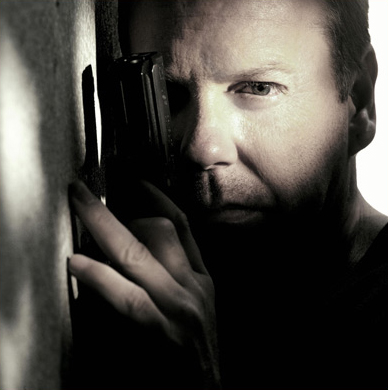
1. The clock. Real-time action over the course of an entire television season is one of the more amazing innovations in the history of modern entertainment. One of the best truisms I’ve heard about “24” is the producer who said the show’s central figure isn’t Counter Terrorist Unit Special Agent Jack Bauer—it’s the clock.
2. The “clock sound” is louder on the way into a commercial break than coming back from commercial.
3. Kiefer Sutherland. The guy was born to play Jack Bauer. He sets the tone for the entire show; he’s the foundation, and the standard-bearer. Sutherland’s at his best not when running or shooting at full tilt or screaming at someone (as you might think), but in moments of quiet, deadly fury.
4. Jack often serves as judge, jury, and executioner.
5. Jack Bauer jokes are hysterical.
6. The casting, overall, is superb—and it better be, because new people are coming in all the time. No character is safe, which not only adds a heightened sense of drama to every season, but keeps once-beloved personalities from going stale.
7. When characters die, they are briefly mourned and often missed, but the show moves on. No over-sentimentality allowed (thank goodness).
8. Then again, there’s just the right amount of emotion simmering right at the surface—especially for Jack—and you have to have seen every episode of every season to get the full impact.
9. The episode-ending cliffhangers are consistently the best I’ve ever seen, even better than the doozies on “Alias.”
10. The plot MOVES. Just when you think everything’s going to be resolved, a whole new Pandora’s box comes barreling down on top of you in midstream.
11. The villains, on balance, are well-developed, three-dimensional characters, with clear (if sometimes conflicted and objectionable) motivations for their actions.
12. Mary Lynn Rajskub’s facial expressions while playing systems analyst and all-around techno-guru Chloe O’Brian are priceless.
13. The show uses hyper-real scenarios to demonstrate real truths. There may not be a superhero like Jack on our side, but “24” reminds us people are sacrificing their lives for this country all the time—and I’m thankful and glad to have them out there.
14. Inner-office and inter-agency politics at CTU have national security implications. (Another example of reality in the hyper-real scenario.)
15. With all this craziness going on, you’d think the dialogue would be perpetually cheesy and/or stilted. By and large, it’s not.
16. Good guys drive Fords, bad guys drive Chevys.
17. The show is essentially apolitical, from a Democrat vs. Republican standpoint.
18. The writers aren’t afraid to use torture as an interrogation method.
19. The doors inside CTU make cool whooshing sounds.
20. The CTU telephone ringer is distinctive and never seems to annoy me, even after 120 episodes.
21. Real U.S. military personnel used at least one episode’s action scenes as a training mission.
22. Watching four (or eight) episodes in a row on DVD is great fun—and better than just about any movie you’re going to find (until the “24” movie hits theaters, of course).
23. “24” seems to only be getting better. I didn’t think anything could top Season 4, yet Season 5 managed to do it, without question. We’ll see if that trend continues when …
24. The curtain goes up on Season 6 Sunday at 8 p.m. with a two-night, four-hour extravaganza!
The Art of Monk
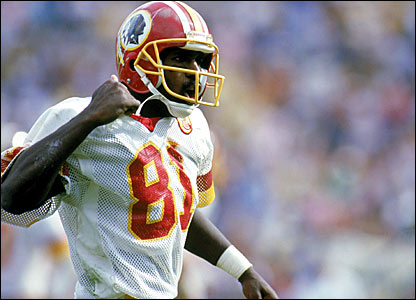
Former Washington Redskins wide receiver Art Monk—who just happens to be my favorite football player of all time—is once again on the ballot for this year's Pro Football Hall of Fame class. Instead of going into my long rant about why he should ALREADY be in, I'll defer to this guy, whose 20-minute video montage of Monk's career is everything and anything that needs be said.
See, this is why I can't throw out all my Redskins stuff.
Tuesday, January 09, 2007
(The Voice of) My Generation
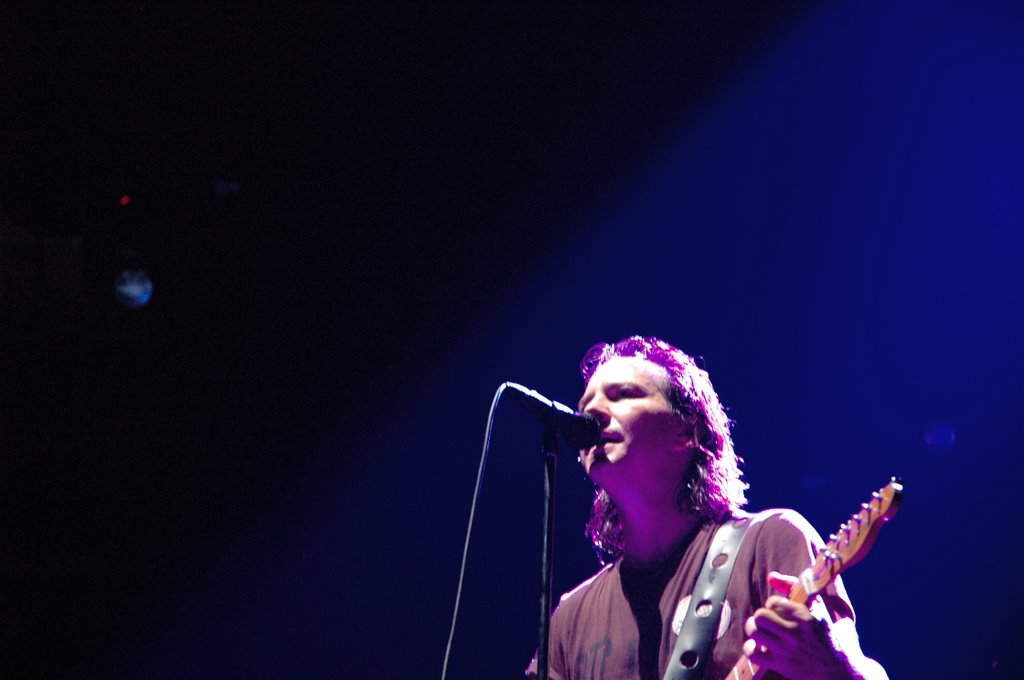
Eddie Vedder can sing anything.
Case in point: His new cover of The Who’s “Love, Reign O’er Me.” The song appears in an upcoming Adam Sandler film, “Reign Over Me” (co-starring Don Cheadle), that looks like it could be a welcome return to “Punch-Drunk Love” territory for the typically juvenile actor.
Anyway, Eddie recorded an outstanding version of “Reign” for the soundtrack, and it debuted in full earlier this week on a Seattle radio station; you can hear a recording made from that airing (albeit recorded over the Internet) here.
Eddie is quite particular about the songs he chooses to cover—both on official recorded versions and those that pop up during live sets. They almost always mean something special to him, and his passion clearly fuels the performances. It’s a remarkable thing, really, because his rugged, unmistakable baritone can seemingly fit into any song he chooses.
When I call Eddie the voice of my generation, I don’t mean in some literal, artsy sense—I mean his actual vocal performance (his lyrics, actually, can be hit or miss—more hits than misses, but still …). It was his voice, and his intensity, that originally drew me to Pearl Jam, and it’s the reason I’ve stuck around all these years (with all due credit to the most underrated guitarist of my generation, Mr. Mike McCready).
So this latest in a long line of excellent cover choices got me thinking about my favorite Vedder covers; he’s exposed me to some great music. Note: This list is focused on EV covers, not PJ covers. Thus no “Rockin’ in the Free World” or “Baba O’Riley” or the like, because those are more full-band experiences than strictly Ed songs. These are the 15 favorite covers I most strongly identify with his incredible voice. Note No. 2: This list is comprised only of the covers I’ve heard either via bootleg or in person; Pearl Jam have covered a few hundred songs in their career, and by no means have I heard them all.
1. “Throw Your Arms Around Me,” Hunters and Collectors (as performed 8.18.2000 in Indianapolis)—Just a simple little song, but its infectious melody—played solo on guitar—fits Ed’s voice perfectly. According to pearljam.com, he’s only performed it 12 times and only once during the entire 2000 tour—thankfully, I was lucky enough to be out on the lawn that night. Oddly, this is one of the few songs I haven’t gone back and checked out the original source material. Have to do something about that …
2. “One Step Up,” Bruce Springsteen (as performed on a pre-PJ EV demo)—I had always liked this song from “Tunnel of Love,” but hearing this stunning karaoke-style rendition put it over the top. I didn’t know anything about it when I downloaded several years ago, and that first listen blew me away.
3. “Save It for Later,” The English Beat—No “Betterman” feels quite complete without this tag. Too many great versions over the years to choose from, though that night in Indy featured a stirring rendition (what a show that was!). Thanks, Ed, for introducing me to The English Beat.
4. “I Am A Patriot,” Little Steven Van Zandt—This was my No. 1 choice for years, as it’s a beautiful song sung to perfection by Ed, and a political song I could actually identify with. But the stretch of lines that ends with “I ain’t no Democrat, and I ain’t no Republican” doesn’t ring true anymore after Ed’s shameless shilling for a moron like John Kerry during the Vote for Change Tour in 2004. Still an awesome cover, though.
5. “It’s OK,” Dead Moon (as performed 8.3.2000 in Virginia Beach and 8.24.2000 in Jones Beach, N.Y.)—“Betterman” may not feel quite right without “Save It for Later,” but there IS no “Daughter” without a tag, and this is my favorite of the many, many great ones over the years. “It’s OK” became a song of catharsis in 2000 after nine fans died at the Roskilde festival in Germany earlier that summer. I honestly thought the band would break up (so did they, for a while), but it’s moments like this that kept them going. The Jones Beach version was included on the “Touring Band 2000” DVD, and it’s a must-see goosebump moment. (Looking forward to the similar THREE-DISC 2006 version due in a few months!)
6. “I Believe in Miracles,” Ramones (as performed with Zeke on the Ramones tribute CD)—You want passion? I give you EV covering the Ramones. This song absolutely blasts off that album and dominates every other entry included. Ed’s performance was so awesome, he actually has two Ramones covers on the CD; the other, “Daytime Dilemma (Dangers of Love),” is good, but “Miracles” is spectacular.
7. “The Promised Land,” Bruce Springsteen (as performed with Sleater-Kinney on 10.3.2005 in Philly)—An absolute, total, shocking surprise of a pre-set opener. And it was basically PERFECT, right down to the harmonica solo (although Ed did have a little trouble with a few of the high notes). You can read more about it here.
8. “Naked Eye,” The Who (as performed solo 2.24.1994 in NYC)—Ed takes the stage for a guest appearance as part of Roger Daltrey’s 50th birthday bash and makes an indelible impression on the Who faithful in the crowd that night—and on me, listening to it years later. As best I can recall, Ed’s unbelievable version of “Naked Eye” gave me the final push I needed to start really listening to The Who—you know, beyond that “best of” sort of way. He played seven songs over the course of that two-night affair, and they are all stellar.
9. “I Won’t Back Down,” Tom Petty (as performed solo during the 1994 tour)—The notion of bootlegs on the Internet was in its infancy while I was in college. This cover (I still don’t know which version) was one of the first songs I downloaded; I was so thrilled with it, I burned it onto a CD ASAP and ran over to a friend’s dorm room—a huge Petty fan—to play it for her, and she was floored by it, too. Just one of those nice PJ-related musical memories I’ll never forget. You know what sucks, though? I think I’ve lost that CD …
10. “Let My Love Open the Door,” Pete Townshend—Ed’s performed this song, my favorite of Townshend’s solo work, multiple times—solo, with the band, and with Pete. It’s basically great each time, any way he does it.
11. “Masters of War,” Bob Dylan (as performed 10.16.1992 in NYC)—Ed absolutely eats this song alive. This version was played with Mike during a Dylan tribute at MSG but has been in regular rotation since 2003 for obvious reasons.
12. “Timeless Melody,” The La’s (as performed 6.14.2000 in the Czech Republic)—Thanks, Ed, for introducing me to The La’s.
13. “Modern Girl,” Sleater-Kinney (as performed 10.3.2005 in Philly)—Great little tag at the end of “Not for You.” Thanks, Ed, for introducing me to Sleater-Kinney.
14. “Growin’ Up,” Bruce Springsteen (as performed 7.14.2003 in Holmdel, N.J.)—I basically bought this bootleg just for this song, and it turned out to be a train wreck. Still, a gallant, endearing try.
15. “Love, Reign O’er Me,” The Who (as performed on the “Reign Over Me” soundtrack)—I’ll have to wait until I hear an official version, but something tells me this song will be moving up the list rapidly—and soon.
Subscribe to:
Posts (Atom)

 Posts


