And this great list doesn't even include Pearl Jam, Springsteen, Dashboard, Cash, and Petty. Oh, it's been a VERY good year already:
• “Decemberunderground,” AFI—It’s been three years since AFI (A Fire Inside) released their breakthrough smash “Sing the Sorrow,” and, apparently, success hasn’t really changed the California quartet. This follow-up is a strange mixture of regression and progression for a band that prides itself on continually evolving. Some entries, such as “Kill Caustic,” dip back into frontman Davey Havok’s hardcore roots more than the previous record. In other places, such as the infectious lead single “Miss Murder,” the band pushes further along on its journey toward electronica and industrial beats. And then there’s “Summer Shudder” and “Love Like Winter,” two pop/rock gems so catchy and smooth, they’re like boy band songs with street cred. Overall, “Decemberunderground” is an excellent listen and stands up well against its seminal predecessor, though this is about as hardcore as I’m willing to go. Grade: A-
• “The Gold Record,” The Bouncing Souls—About to enter their third decade, this well-traveled New Jersey quartet may finally get the credit they deserve with an extremely accessible album chock-full of great songs. “The Gold Record” is pure pop/punk genius from start to finish, shedding the Souls’ thrashing double-kick drum cadences (a form of punk I simply cannot stand) for more traditional singalong melodies and rousing anthems such as “So Jersey,” “Sounds of the City,” and “For All the Unheard”—to name just a few. Ironically, the only song here to use the aforementioned double-kick is also the most inspired cut on the record: The story behind “Letter from Iraq” runs deep but, essentially, the lyrics are culled from a letter written by a soldier serving overseas obviously disabused with the notion of “truth, justice, and the American way.” The group formed a strong bond with the serviceman after meeting him in Germany and, rather than try to summarize his sentiments in their own words, the Souls simply merged lines from one of his letters into a cohesive three-minute protest song. I don’t agree with the sentiment, but the Souls’ approach is brilliant and, pardon me, sets the gold standard in the current overflowing crop of anti-war chaff throughout the music industry (are you paying attention, Mr. Vedder?). I certainly don’t qualify as a “true believer,” but “The Gold Record” made a definite fan out of me. Grade: A
• “Broken Boy Soldiers,” The Raconteurs—What, exactly, was everyone expecting from this album? Despite Jack White’s protestations to the contrary, the Raconteurs are nonetheless, hello, a SIDE PROJECT. And as side projects go, this effort is stellar in that it doesn’t really seem like one, after all. “Soldiers” is not the guitar extravaganza I was hoping for based on “Steady As She Goes” and “Store Bought Bones” (and White’s freedom from the strict rules he established for The White Stripes), but that’s not necessarily a bad thing. White’s old-school ethos mix effortlessly with co-founder/frontman Brendan Benson’s pop/rock sensibilities to the point where it’s hard to tell where one ends and the other begins. The results are, in general, surprisingly eclectic, from the aforementioned Zeppelin-esque “Bones” to the haunting rootsy title track to the synth-tweaked “Intimate Secretary” to the (and this IS a shocker) Wilco-esque “Together.” In fact, the only lackluster entry on the record doesn’t come until the ninth track with the plodding and dull Benson-fronted “Call It a Day,” a song just itching to let loose that, unfortunately, remains confined. Thankfully, White brings “Soldiers” home with the aptly titled “Blue Veins,” a wicked rhythm and blues finale that leaves you wanting more. One thing’s for sure: This is a whole lot better than “Get Behind Me Satan.” Grade: A-
• “Eyes Open,” Snow Patrol—While more polished, straightforward, and certainly more radio-friendly than 2004’s “Final Straw,” this new collection from the British quintet is nearly as good and seems to finally have broken through in the States—an occurrence long overdue. Frontman Gary Lightbody gives Chris Martin everything he can handle with tunes that are warmer and more accessible than anything Coldplay have to offer. And certainly don’t judge all of “Eyes Open” off the crooning, orchestral slow build of lead single “Chasing Cars”—there’s plenty of U2-style rock to go around, especially stellar cuts “Hands Open” and “It’s Beginning to Get to Me,” balanced by the group’s vaunted indie stylings on tracks such as “Shut Your Eyes” and the bell-tinged “You Could Be Happy.” If you like “Chasing Cars,” go buy this record—it’s not as good as “Final Straw,” but it doesn’t disappoint, either. Grade: B+
• “Louder Now,” Taking Back Sunday—It’s tough to follow a career-defining album such as TBS released in 2004 with the spectacular “Where You Want to Be.” “Louder Now” is the New York hardcore band’s first album on a major label, and some of the rough edges have been sanded off in favor of a cleaner, slightly more polished sound—and that’s not a good thing. Still, TBS nevertheless provide another strong set of muscular hard-rocking screamalong anthems on their third album. If “Louder Now” is not quite as good as “Where You Want to Be,” that’s okay—nothing could be. Grade: B+
• “Show Your Bones,” Yeah Yeah Yeahs—A strong contender for Album of the Year honors, the NYC trio’s sophomore album is almost nothing like their trashy, messy debut—and that’s a great thing. “Fever to Tell,” released in 2003 at the back end of the “garage rock” revival (whatever) was okay for what it was—a slapdash batch of dirty, guitar-heavy rockers—but didn’t come close to living up to the hype. “Bones,” on the other hand, is a masterpiece, a giant leap in songcraft that expands on the promise shown in “Maps,” the big hit from “Fever.” Opener and lead single “Gold Lion” is captivating as it adds new layers on every verse and chorus, finally exploding in the final minute. “Lion” is a sign of much to come, as there isn’t a bad song to be found on this album that steps out of the garage and into the light of genre-defying and –bending music—punk, classic rock, pop, even a little dance and country, it’s all here. All hail lead singer Karen O, whose ethereal voice will now hopefully carry the flag recently rescinded by Sleater-Kinney (may they rest in peace). Grade: A
Sunday, July 02, 2006


Saturday, July 01, 2006
'Superman Returns'
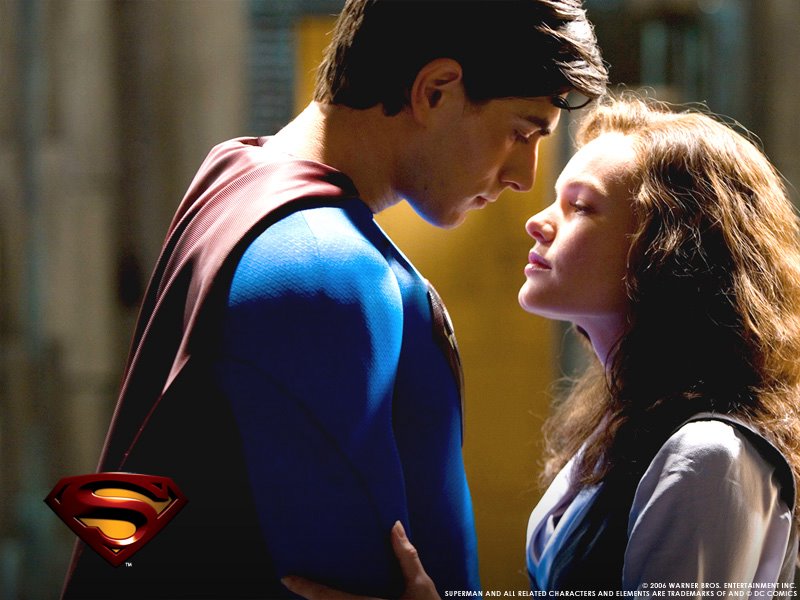
Yes, Supes, we’ve all missed you.
Perfectly cast, perfectly written, and, most important, perfectly realized, “Superman Returns” is the quintessential summer blockbuster, an eye-blasting film nevertheless not so high on action that it forgets its soul.
Director Bryan Singer one-ups even his two spectacular “X-Men” movies with what must be considered one of the genre’s best adaptations of all time. He dedicates this film to Christopher Reeve, and I can’t imagine the late movie icon who so famously took on the title role from 1978-87 wouldn’t endorse this heartfelt homage. It’s clear right from the zoom-in opening credits—complete with John Williams’ original theme music—that Singer knows his history and truly loves this character. His “X”-scribes, Michael Dougherty and Dan Harris, make some gutsy choices with the plot, but Superman is definitely back in all his red, yellow, and blue glory—tights, cape, and all.
Newcomer Brandon Routh proves, much like Reeve, to be a diamond in the rough as Superman, who returns to earth after a five-year absence while searching for remains of his home world, Krypton. In that time, Lois Lane (Kate Bosworth) has given birth to a son, Jason (Tristan Lake Leabu, in his first role), and is now engaged to Richard White (James Marsden, otherwise known as Cyclops from the “X-Men” films (don’t worry, he’s MUCH better here)), related to Daily Planet editor-in-chief Perry White (Frank Langella).
So, needless to say, ol’ Clark Kent has a bit of catching up to do now that he’s back zooming around Metropolis. Not to mention his nemesis, Lex Luthor, is out of jail (thanks to a legal loophole) and plotting, again, to take over the world. The greatest villain in all of comic book lore is played to the nines in “Returns” by Oscar-winner Kevin Spacey, his best role—and performance—in years. Where Gene Hackman envisioned Luthor as a wisecracking aw-shucks megalomaniac in the original “Superman,” Spacey goes all out in a preferable version of the sadistic villain, chewing up the scenery along the way.
The primary criticism I’ve read of this film is Singer has somehow “lost the fun” of the original Reeve incarnation. I beg to differ. The special effects in “Superman Returns” are so stunning, this time you really will believe a man can fly. In the nearly three decades since “Superman,” you’d think we’d seen it all when it comes to high-wire thrills, yet Singer somehow still manages to blow your hair back throughout his movie’s two and a half hours. The first time Clark blasts off to save Lois from certain doom, goosebumps run from head to toe.
Even more important than the stunning visuals, though, is Singer’s now tried-and-true ability to find the hearts in even the most outlandish characters (blue-painted and tattooed Nightcrawler from “X2,” for example). The idea of a love triangle between Superman, Lois, and her fiancé isn’t exactly a whimsical comic book fantasy, but it allows the Man of Steel’s character to shine in a way Reeve’s never did. Luthor’s destructive antics almost play second fiddle to the story of how Superman finds his way back into a world radically different from the one he left. Routh may not be having as much “fun” as his predecessor, but Kal-El has never felt more human.
And in a world that feels like it’s ripping apart at the seams, the idea of such a relatable Superman actually put a little lump in my throat. Wouldn’t it be incredible if some blue blur could scream down from the heavens and make all the pain go away?
Well, for the 154 minutes of “Superman Returns,” he actually does.
Grade: A
Sunday, June 11, 2006
He Wrecked Us: Tom Petty & The Heartbreakers, Live at Nissan, 6.10.06
Tom Petty is the author of so many songs woven into the fabric of my life, I almost forget how great they actually are.
Until he plays them right in front of my face, that is, and then I remember all over again what made me love them in the first place.
Petty is taking his Heartbreakers out on the road this summer for what he says could be the last big-top road trip of their longstanding careers. If so, it’s a shame, because as he proved Saturday night at Nissan Pavilion, there’s nobody out there quite like the Mad Hatter. He’s a showman without being cheesy, a craftsman without being rote, and, even after 30-plus years, can still put on one incredible show.
It’s truly amazing the depth of this man’s work when five of the first six songs Saturday night were the following: “Listen to Her Heart,” “You Don’t Know How It Feels,” “I Won’t Back Down,” “Free Falling,” and “Mary Jane’s Last Dance.” That lineup could CLOSE a show and bring the house down, much less open it! But, as Petty said, “We’ve got a lot of music for you tonight.”
After a trio of excellent cover songs (well, does a Wilburys song count as a cover?), Petty brought out a surprise special guest: Stevie Nicks, who he described as his “soul sister.” Look, I don’t even own a Fleetwood Mac album, but this was still pretty cool, if nothing else than for the shock value. And it was easy to tell the two of them were having a great time, both on the beautiful, quiet duet “Stop Draggin’ My Heart Around” and the uptempo “I Need to Know.”
Up next was “Melinda,” a song Petty’s never recorded but remains nonetheless a longstanding concert favorite. The song showcases something else about this band that you might not expect—they love to jam. Nearly every song is stretched beyond its original borders with an extra coda, an extended intro, or, as is the case here, long jams in the middle, this time courtesy of keyboardist Benmont Tench. Petty doesn’t rush through anything. The lights go down at the end of each song, punctuating the quality and meaning of every entry in the set. And when such care and attention is given to everything he does, it makes Petty’s two-hour set feel more like three.
Petty slowed things down a bit with a trio of quieter tunes, highlighted by one of two new songs unveiled Saturday off his forthcoming “Highway Companions” album. Both were fantastic, including the acoustic “Square One” (destined to be a classic) and slow-builder “Saving Grace,” which fit nicely into the set’s opening sextet of power chords.
After a big singalong during a slowed-down version of “Learning to Fly,” Petty & Co. revved up again to close the set with three more classics. Each of these were played with so much power and passion, I thought they all would end the set. It’s hard to beat the trio of “Don’t Come Around Here No More,” “Refugee,” and “Running Down A Dream.”
So, let me pause here to mention the awesome stage setup for this tour. There are four large video screens at the back of the stage which, at various times, move up and down and have either a live shot of the band or images that complement the music. Meanwhile, a series what I can only assume are LCD screens hang in rows from the ceiling, made to resemble cabaret-style lights. These, too, are movable, and are often synchronized with the scenes from the four big screens. The production summarizes Petty perfectly: Just enough show to make you sit up and take notice, enough to add a little umph to the performance, but never distracting. Sensible, judicious, … perfect.
The band closed the show with a fine trio, “You Wreck Me,” “Mystic Eyes” (which I believe is a Van Morrison cover), and the staple “American Girl,” which also closed the group’s first album way back in 1976.
I know Petty says this tour is the final major hoorah for his beloved highway companions, but I just can’t believe it. At 55, the iconic frontman looks as spry as ever, spinning and prowling around the stage like it’s 1976, not 2006. If this truly is The Heartbreakers’ last big go-round, then we’ll all be missing a little something in summertimes to come. Because this band and this show are flat-out phenomenal.
Tom Petty & The Heartbreakers
Nissan Pavilion
Bristow, VA
6.10.06
Listen to Her Heart
You Don’t Know How It Feels
I Won’t Back Down
Free Fallin’
Saving Grace
Mary Jane’s Last Dance
I’m A Man (Yardbirds cover)
Oh Well (Fleetwood Mac cover)
Handle with Care (Traveling Wilburys)
Stop Draggin’ My Heart Around (w/Stevie Nicks)
I Need to Know (w/Stevie Nicks)
Melinda
Square One
Insider (w/Stevie Nicks)
Learning to Fly
Don’t Come Around Here No More
Refugee
Running Down a Dream
Encore:
You Wreck Me
Mystic Eyes (Van Morrison cover)
American Girl
Running Time: 2 hours
•••And a note about opener Trey Anastasio***
I’m certainly no Phish-head, but this guy has totally won me over. I highly recommend his latest solo album, “Shine,” and I am THERE whenever he comes this way again as a headliner. Saturday’s 50 minutes wasn’t nearly enough.
Until he plays them right in front of my face, that is, and then I remember all over again what made me love them in the first place.
Petty is taking his Heartbreakers out on the road this summer for what he says could be the last big-top road trip of their longstanding careers. If so, it’s a shame, because as he proved Saturday night at Nissan Pavilion, there’s nobody out there quite like the Mad Hatter. He’s a showman without being cheesy, a craftsman without being rote, and, even after 30-plus years, can still put on one incredible show.
It’s truly amazing the depth of this man’s work when five of the first six songs Saturday night were the following: “Listen to Her Heart,” “You Don’t Know How It Feels,” “I Won’t Back Down,” “Free Falling,” and “Mary Jane’s Last Dance.” That lineup could CLOSE a show and bring the house down, much less open it! But, as Petty said, “We’ve got a lot of music for you tonight.”
After a trio of excellent cover songs (well, does a Wilburys song count as a cover?), Petty brought out a surprise special guest: Stevie Nicks, who he described as his “soul sister.” Look, I don’t even own a Fleetwood Mac album, but this was still pretty cool, if nothing else than for the shock value. And it was easy to tell the two of them were having a great time, both on the beautiful, quiet duet “Stop Draggin’ My Heart Around” and the uptempo “I Need to Know.”
Up next was “Melinda,” a song Petty’s never recorded but remains nonetheless a longstanding concert favorite. The song showcases something else about this band that you might not expect—they love to jam. Nearly every song is stretched beyond its original borders with an extra coda, an extended intro, or, as is the case here, long jams in the middle, this time courtesy of keyboardist Benmont Tench. Petty doesn’t rush through anything. The lights go down at the end of each song, punctuating the quality and meaning of every entry in the set. And when such care and attention is given to everything he does, it makes Petty’s two-hour set feel more like three.
Petty slowed things down a bit with a trio of quieter tunes, highlighted by one of two new songs unveiled Saturday off his forthcoming “Highway Companions” album. Both were fantastic, including the acoustic “Square One” (destined to be a classic) and slow-builder “Saving Grace,” which fit nicely into the set’s opening sextet of power chords.
After a big singalong during a slowed-down version of “Learning to Fly,” Petty & Co. revved up again to close the set with three more classics. Each of these were played with so much power and passion, I thought they all would end the set. It’s hard to beat the trio of “Don’t Come Around Here No More,” “Refugee,” and “Running Down A Dream.”
So, let me pause here to mention the awesome stage setup for this tour. There are four large video screens at the back of the stage which, at various times, move up and down and have either a live shot of the band or images that complement the music. Meanwhile, a series what I can only assume are LCD screens hang in rows from the ceiling, made to resemble cabaret-style lights. These, too, are movable, and are often synchronized with the scenes from the four big screens. The production summarizes Petty perfectly: Just enough show to make you sit up and take notice, enough to add a little umph to the performance, but never distracting. Sensible, judicious, … perfect.
The band closed the show with a fine trio, “You Wreck Me,” “Mystic Eyes” (which I believe is a Van Morrison cover), and the staple “American Girl,” which also closed the group’s first album way back in 1976.
I know Petty says this tour is the final major hoorah for his beloved highway companions, but I just can’t believe it. At 55, the iconic frontman looks as spry as ever, spinning and prowling around the stage like it’s 1976, not 2006. If this truly is The Heartbreakers’ last big go-round, then we’ll all be missing a little something in summertimes to come. Because this band and this show are flat-out phenomenal.
Tom Petty & The Heartbreakers
Nissan Pavilion
Bristow, VA
6.10.06
Listen to Her Heart
You Don’t Know How It Feels
I Won’t Back Down
Free Fallin’
Saving Grace
Mary Jane’s Last Dance
I’m A Man (Yardbirds cover)
Oh Well (Fleetwood Mac cover)
Handle with Care (Traveling Wilburys)
Stop Draggin’ My Heart Around (w/Stevie Nicks)
I Need to Know (w/Stevie Nicks)
Melinda
Square One
Insider (w/Stevie Nicks)
Learning to Fly
Don’t Come Around Here No More
Refugee
Running Down a Dream
Encore:
You Wreck Me
Mystic Eyes (Van Morrison cover)
American Girl
Running Time: 2 hours
•••And a note about opener Trey Anastasio***
I’m certainly no Phish-head, but this guy has totally won me over. I highly recommend his latest solo album, “Shine,” and I am THERE whenever he comes this way again as a headliner. Saturday’s 50 minutes wasn’t nearly enough.
Thursday, June 08, 2006
Move Over Tony, There’s a New Sheriff in Town
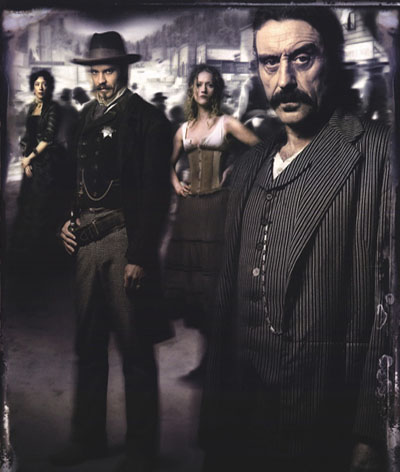
Now that HBO’s “The Sopranos” has finally stumbled to the end of its worst season (by far), the once-scintillating series makes way Sunday night for its successor as not only the best drama on HBO, but arguably the best show on TV, period: “Deadwood.”
If that moniker rings a bell, it’s probably from one of myriad reports about its crass surface. Various media outlets have relished blaring headlines with the number of f-words or c-suckers uttered per episode (I don’t know the actual figures, but the total is surely in triple digits over the course of an hour). If you can get past the profanity, though (and, I guess, the random violence, nudity, and various other forms of depraved “adult content”), “Deadwood” slowly untangles its own complicated storylines to reveal a truly remarkable show. While not as hyped or acclaimed as “The Sopranos,” it’s just as good—maybe even better. The final episode of Season 1, for instance, is one of the best hours of entertainment I’ve ever encountered.
Created and produced by David Milch (who also created another controversial series, “NYPD Blue”), “Deadwood” is set in the late 19th century in the Dakota town of Deadwood, just prior to its annexation into the United States. A camp with no laws and lots of gold, Deadwood draws prospectors from all ranges of society—New York dignitaries to prostitutes, legitimate businessmen to entrepreneurs as corrupt as they come.
And then there’s Seth Bullock, a former lawman from Montana who was so worn down trying to enforce order in the Wild West, he went to the one place he thought he could escape it and live a quiet, unassuming existence. Unfortunately for Bullock, a deep-rooted sense of justice isn’t so easily shaken, and it wasn’t long before he was setting wrongs to rights in Deadwood, no matter how reluctantly. When he stalks down the thoroughfare in fury, eyes ablaze, it gives me chills.
Bullock is played to sizzling, righteous perfection by previous bit-player Timothy Olyphant, who conveys more in one baleful glare than most men could accomplish with a lengthy monologue. Not that there aren’t plenty of monologues in “Deadwood” to go around. In fact, other than the extreme content, another factor in the series’ relative lack of accessibility is the Shakespearean style in which the dialogue is written and delivered—right down to the soliloquies and asides (this aspect of the show is worthy of unabating praise all by itself—the writing is just fantastic).
Perhaps that’s why veteran stage and character actor Ian McShane took so well to his role as saloon owner/proprietor Al Swearengen (an apt name if ever there was one), a wolf in devil’s clothing. Holding court in his second-floor office like the king of England, Swearengen epitomizes the looking-out-for-number-one mentality needed to survive in Deadwood. He’s a complicated man whose deft political machinations are as lethal as his knife, and whose loyalties shift to whomever can serve his purposes best. He’ll fight to the death in one episode, then shake his former combatant’s hand in the next. And, yes, he’s masochistic and just a little bit crazy. But he commands attention, nonetheless.
“Deadwood’s” first 24 episodes are way too complicated to summarize here (in fact, they require such mental effort to watch, I can only take two at a time). Suffice to say, Milch sets these two alpha males—the reserved, honorable Bullock and the over-the-top, profane Swearengen—not only against each other, but against the encroaching (and equally corrupt) United States government; the only thing they hate more than each other, apparently, is someone from outside trying to move in on their territory. Olyphant and McShane are so terrific in these roles, when they share the screen the electricity generated is reminiscent of Pacino-de Niro in “Heat”—and, no, that’s not an exaggeration.
And they’re just two members of a spectacular cast. Brad Dourif (“The Lord of the Rings”) shines as the troubled town doctor; Robin Weigert earned a well-deserved Emmy nod for her alternately touching and hysterical portrayal of Calamity Jane; Paula Malcomson investigates every inch of the mentality of prostitute Trixie; and Molly Parker demonstrates the difficulty of being a woman in a man’s world through the dignified, yearning widow Alma Garret. (It’s also interesting to note that a series as misogynist as “Deadwood” could feature just as many strong female characters as male.)
Look, “Deadwood” certainly isn’t for everyone, otherwise there wouldn’t be a question about whether it’s going to be cancelled after this season. Its Aaron Sorkin-esque political minutiae can even be wearisome to the most dedicated of fans. But if you can somehow cope with the brutal violence and rampant curse words (all necessary to effectively set the atmosphere and realism, mind you (and McShane turns use of the f-word into an art form)), what you’ll find is a remarkably humane series with a heart of gold. Unlike “The Sopranos,” "Deadwood" is populated with plenty of people to love.
Saturday, June 03, 2006
‘X-Men: The Last Stand’
I didn’t think any movie could disappoint me and betray a loyal fanbase as much as the “Star Wars” prequels or the "Matrix" sequels, but “X-Men: The Last Stand” now takes its rightful place on this Mount Rushmore of infamy. It’s a shame this abomination is making so much money, because no studio should be encouraged to release something this bad.
I knew it, too, I just didn’t want to believe it. But as soon as I heard Bryan Singer had left the franchise after two excellent installments and was replaced by Brett Ratner (whose claim to fame is directing the two “Rush Hour” movies), there was nowhere to go but down. Why did it have to be Ratner? Anyone would have been better than this popcorn jockey, because he’s delivered arguably the worst mega-blockbuster of all time. I mean, this is “Matrix Reloaded” bad.
Worse, he and screenwriters Simon Kinberg and Zak Penn trample over the first two films. After watching “The Last Stand,” immediately try to forget it. The “creative” team behind this film can only drum up dramatic moments by killing off three major characters—and not in a good, meaningful way. I got the impression they just couldn’t figure out how to write a better story and went for cheap emotional payoffs that come up bankrupt.
And as for the remaining key characters that somehow avoided the chopping block, gone is every ounce of wit, humor, and genuine emotion found in the first two films. Instead, they’re reduced to spitting out every action-movie cliché in the book, effectively killing their personalities anyway. (Alan Cumming looks like a genius now for not reprising his role as Nightcrawler. These buffoons couldn’t have handled the complexities.) You want to know how awful this movie is? Hugh Jackman’s Wolverine is actually BORING. There are several scenes of dialogue so bad, I can’t believe the actors didn’t stop everything and demand a rewrite on the spot. You know, the scary thing is, maybe they did, and this is the best Ratner & Co. could come up with.
Ratner’s only saving grace in “The Last Stand” is his full-on exploitation of all the awesome mutant powers at his disposal. As bad as it is, if you’re planning on seeing this film at all, you should see it on the big screen to get the full effect of the action, because there are some genuinely cool moments (Iceman vs. Pyro comes to mind); if you wait until DVD, though, all the mutant powers in the world probably won’t keep you from hitting the eject button before you’re even halfway through. Of course, let’s remember Ratner is actually just benefiting from the bankroll Singer spent two movies building.
The only other good thing about “The Last Stand” is Kelsey Grammer as Hank McCoy, a.k.a. The Beast. This is an inspired selection, and ol’ Frasier is spectacular in his first foray into big-budget territory.
Still, that only means this film is barely watchable at best; at worst, it destroys the X-Men franchise. Let’s hope this really is the last one—unless they can pry the reins out of Ratner’s ham-fisted hands, that is.
Grade: Special effects/mutant coolness A, everything else F. Overall: D+
I knew it, too, I just didn’t want to believe it. But as soon as I heard Bryan Singer had left the franchise after two excellent installments and was replaced by Brett Ratner (whose claim to fame is directing the two “Rush Hour” movies), there was nowhere to go but down. Why did it have to be Ratner? Anyone would have been better than this popcorn jockey, because he’s delivered arguably the worst mega-blockbuster of all time. I mean, this is “Matrix Reloaded” bad.
Worse, he and screenwriters Simon Kinberg and Zak Penn trample over the first two films. After watching “The Last Stand,” immediately try to forget it. The “creative” team behind this film can only drum up dramatic moments by killing off three major characters—and not in a good, meaningful way. I got the impression they just couldn’t figure out how to write a better story and went for cheap emotional payoffs that come up bankrupt.
And as for the remaining key characters that somehow avoided the chopping block, gone is every ounce of wit, humor, and genuine emotion found in the first two films. Instead, they’re reduced to spitting out every action-movie cliché in the book, effectively killing their personalities anyway. (Alan Cumming looks like a genius now for not reprising his role as Nightcrawler. These buffoons couldn’t have handled the complexities.) You want to know how awful this movie is? Hugh Jackman’s Wolverine is actually BORING. There are several scenes of dialogue so bad, I can’t believe the actors didn’t stop everything and demand a rewrite on the spot. You know, the scary thing is, maybe they did, and this is the best Ratner & Co. could come up with.
Ratner’s only saving grace in “The Last Stand” is his full-on exploitation of all the awesome mutant powers at his disposal. As bad as it is, if you’re planning on seeing this film at all, you should see it on the big screen to get the full effect of the action, because there are some genuinely cool moments (Iceman vs. Pyro comes to mind); if you wait until DVD, though, all the mutant powers in the world probably won’t keep you from hitting the eject button before you’re even halfway through. Of course, let’s remember Ratner is actually just benefiting from the bankroll Singer spent two movies building.
The only other good thing about “The Last Stand” is Kelsey Grammer as Hank McCoy, a.k.a. The Beast. This is an inspired selection, and ol’ Frasier is spectacular in his first foray into big-budget territory.
Still, that only means this film is barely watchable at best; at worst, it destroys the X-Men franchise. Let’s hope this really is the last one—unless they can pry the reins out of Ratner’s ham-fisted hands, that is.
Grade: Special effects/mutant coolness A, everything else F. Overall: D+
Friday, June 02, 2006
You Say You Want A Revolution? Pearl Jam, Live in D.C., 5.30.06

My Red Hot Chili Peppers fandom essentially ended on March 31, 2000, the first and last time I saw them in concert.
That year the Peppers were touring off their spectacular comeback album “Californication,” with the Foo Fighters as special guests. So I hoofed it to Columbus with a bunch of friends to see them, only to find out when we arrived that Dave Grohl was “sick” and the Foos wouldn’t play. Disappointing as that was, I consoled myself with the hope that the Chilis would probably play longer as a result.
No such luck.
Instead, openers Muse played an extended set (not bad, mind you), and the Peppers made us wait for more than an hour before playing through their standard 80-minute set.
Needless to say, I was pissed. They could—and should—have done the right thing and at least tried to make something positive out of the evening. Think of how impressed I would have been had they acknowledged our disappointment by promising to try and take the edge off with a special performance. Nah, instead they took our money and ran.
I can probably count on one hand how many times I’ve listened to them since then—and I LOVED “Californication.”
As Bill Cosby would say, I told you that story so I can tell you this one …
• • •
Giddy shouts of joy reverberated through Pearl Jam’s little corner of the Internet this month when it was revealed the band would play a set for VH-1’s “Storytellers” on May 31. Fans were buzzing over the opportunity to ask Eddie & Co. about their songs and get to hear the stories and themes behind them straight from their mouths—some of the songs, presumably, explained for the first time.
Except me. Why? Because I already had tickets for the D.C. show the night before, and I feared the worst: A set cut short by the necessity of traveling from Washington to New York City in time for an early call the next night. A conserving of energy, holding back on a few thousand people in order to look good for the millions certain to watch a televised performance. All adding up to, by Pearl Jam standards, a subpar outing.
What was I thinking? Pearl Jam never—I repeat, NEVER—mails it in, and I should have known better.
Tuesday night’s show was scheduled to start at 7:30 p.m., but Ed hit the stage at 7:25, guitar in hand, for a gorgeous pre-set cover of Cat Stevens’ “Don’t Be Shy” (is there anything this guy’s voice can’t sing?). Openers My Morning Jacket then jumped onstage right away and played a brief 25-minute set, clearing out well before 8:00 and leaving Pearl Jam plenty of time to do their thing. Which they did, gloriously, for nearly two and a half hours.
They could have said screw it, we have an important gig tomorrow night and that’s all there is to it. But, no, they did the right thing, the honorable thing, and made the most out of what could have been a bad situation, because every night is important for this band. This is what makes PJ great. This is what separates them from the pack. It sounds trite, but I truly believe this band cares deeply about its fans and goes out of its way to protect that relationship. Cut a show short? Uh-uh. Not on your life.
And, man, what a show, clocking in at 29 songs and 2:25 (yes, it’s insane that those figures are considered shorter than usual), Pearl Jam simply trimmed off the fat. This, my 10th show, was perhaps the most well crafted, focused setlist I’ve heard in person.
Look no further than “Release,” one of the band’s best songs and without question the best concert-opener in Pearl Jam’s entire catalog. Man, I love this song—you’ll never convince me that a show opened with “Release” isn’t great. From the very first note (instantly recognizable for many of us), it sets a definite tone—we’re not screwing around here.
That vibe continued with a stellar run of all-out rockers to kick the show into high gear. Hit single “World Wide Suicide” actually translates extremely well live and has truly won me over, with Ed somehow managing to spit out all those lines without missing a beat or veering off track. “Severed Hand” melts my face it’s so raw and powerful, and makes good use of the band’s new light show. There is a rainbow arc of lights across the back of the stage, then another bank high above their heads that at times can shimmer and sparkle similar to U2’s “light curtain” from the Vertigo tour. And all of this is complemented by “laser lights,” essentially a series of spotlights located at the rear of the stage facing out into the crowd that can be wide or narrowed to a thin beam. Mostly used on the new material, it’s not distracting, but not entirely necessary, either. I liked the rainbow arc, but the rest didn’t do much for me.
By this point in the show—yes, just three songs in—the only thing you really need to see is Mike McCready, already going crazy and running in circles on his corner of the stage (always a good sign). And why not? The opening moments of this concert were a showcase for his guitar heroics, with big solos in “Severed Hand” and the old warhorse “Corduroy,” which still bowls me over.
After a rousing “Animal,” Ed spoke for the first time with these magic little words: “We’re just gettin’ started,” leading right into that killer opening riff to none other than “Do the Evolution”—it just reaches out and grabs you by the throat. While this is probably my favorite Pearl Jam song, I’m not so biased that I can’t admit it doesn’t always come off well live. Even though they’ve played it literally hundreds of times, “DTE” is so tight, it requires maximum effort to pull off live. When trotted out late in a show (the second encore, for instance), they typically don’t have enough energy left to play it to full potential. But here, in the No. 6 slot, it still roars, leading wonderfully into the always-magnificent “Given to Fly,” another major piece of the catalog that deserves the early-set treatment.
So Eddie lasted seven songs before delving into politics, albeit lightly (for now). After mentioning what a good time he had in the area on Memorial Day and how happy he is that summer is here, he dropped in a line about “hopefully we can end the war before summer’s end,” leading into the first shocker of the night: “Lowlight,” a beautiful track from 1998’s “Yield” that I had yet to hear in person.
“Lowlight” served as a dividing line between the opening thrills and the meat of the first set, which turned out to be one heck of a stretch. It didn’t hurt that this section began with “Unemployable,” one my favorite cuts off the new album. But follow that with “Grievance” → “Even Flow” → “I Got Shit,” and I need a moment to catch my breath. So, right on cue, here’s “Present Tense,” a highlight of any show and seemingly growing more powerful with age. It’s a little faster, a little harder these days, as Matt sneaks in earlier than before on drums. With Ed allowing the crowd to take over in the chorus—goosebumps, galore.
In another new twist (and I think this was a first), Ed also reworked the beginning of “Betterman” for Booooooom to start the song off on keys; while it makes for a nice change, I still prefer letting the crowd start the whole thing off a la Springsteen’s “Hungry Heart,” but I’m never going to complain about innovation—and we still got to sing the chorus.
Up next was “Inside Job,” a nice transition into the crescendo that closed the main set. I won’t go into my love for this song again (just find my review of the new record), but it’s so good—and has the potential to be even better once they figure out how to really pull it off live (it seems to be the most difficult piece of all the new songs). Right now, the opening section is played on electric guitar instead of acoustic and it’s a little more uptempo, which somewhat deadens the impact of that BIG shift to all-out rocker in the second half. Still, overall, I wouldn’t have traded this song out for anything.
“Wasted Reprise”/”Life Wasted” picked up on the momentum and took it up several notches, because, let me assure you, “Life Wasted” is already at the top of my list for favorite live songs. It fits the band’s strengths perfectly—taut, intense, hard-rocking, and a great segue into a knockout punch of “Why Go” (complete with the traditional drum solo intro) and “Rearviewmirror” to close this section of the show on a huge high. (Ed did a little vocal vamping during the “RVM” bridge, by the way, which I also think is new—and very cool (and, while I’m at it, let me mention the bridge was much harder and faster this time around than any version I’ve ever heard, which, again, is a big improvement).) I can’t stress enough how well this opening set flowed—it was basically pitch-perfect, with none of those awkward “Lukin” into “Wishlist” transitions Eddie has been known to throw in. Each song seemed to complement the previous one and lead gracefully into the next, building and lessening intensity as needed. It was Pearl Jam at their absolute best. And we weren’t close to finished, even on a “short” night.
Over the past couple years, Pearl Jam have fallen into a delicious habit of treating their first encore like an acoustic/soft mini-set. The crew drags some stools onstage and the band takes a load off for a few quiet songs, and it’s just great—makes a show feel even longer than it actually is. Tuesday night’s encore opened with “Man of the Hour,” a wonderful little song Ed wrote for the “Big Fish” soundtrack. That led into Bob Dylan’s “Masters of War,” which maintains Pearl Jam’s legacy of taking another artist’s song and making it completely their own (a la “Rockin’ in the Free World”). “Masters” has evolved quite a bit over the years, now played mostly electric and with more raw power than previous incarnations. It’s lost none of the bile, though, and was a much better political statement in the nation’s capital than any mumbling rant from Ed.
“Small Town” was the only song in the set I would have replaced, simply because it’s rather boring for me at this point. I’d much rather hear “Nothingman,” “Hard to Imagine,” or “Off He Goes” in this slot, but I know it’s a big crowd-pleaser, so I understand why it’s trotted out so much. And, hey, “Come Back” was next, so I can’t complain. This song, yet another highlight on “Avocado,” is just brilliant live. It gave me chills and stuck in my brain more than any other song after the show was over.
Back in October, after attending a classic PJ night in Philly, I wrote that the band plays “Alive” with hope now, rather than bitterness and anger as it was originally intended, and that has made it a highlight of any show. Well, I’m proud to say I was half right. During Wednesday night’s “Storytellers” taping, Ed confirmed this song has changed over the years, but not exactly the way I thought. He said the fans—not the band—made the difference, lifting his personal curse embodied in the writing of this song; our reaction to it changed the way they play it and contributed to Ed’s personal healing process. That’s a stunning revelation from a very guarded person, but I guess not surprising if you stand in a crowd during any rendition of “Alive.” Tuesday night, as we pumped our fists and chanted “Hey!” over and over as one, Ed picked up on our cue and started singing along to us. It’s one of my favorite parts of any show, looking around at the crowd during this song. Although not in my personal top 20, it is nonetheless essential to understanding Pearl Jam’s core—catharsis and release through a shared musical experience. The lyrics may be dour, but the music, the ability to share that pain, fills everyone with hope and turns tragedy and struggle into transcendence.
But enough of that mushy stuff. “Comatose” opened the second encore and absolutely blew the roof off the building. This new album is something else, ladies and gentlemen, and these songs (hopefully) aren’t going anywhere for a while. And then there’s “Leash,” which disappeared for more than a decade before a lame fan “campaign” coerced the band into pulling it out of the attic where it belongs and into the set. It debuted in Boston last week and has been played at every show since—a little “you wanted it, you’re gonna get it,” courtesy of Pearl Jam. The song does nothing for me, but it’s not bad live (certainly better than “Glorified G,” a clunker inexplicably making regular appearances in this slot these days), and it allowed me to check another track of my “to hear” list, so fine.
Ed just couldn’t let the night slip away without taking a few more jabs at the Bush administration, but at least he did so with humor. Dick Cheney gave him a call the other day, he quipped, and made a request for Tuesday night: Neil Young’s “Fuckin’ Up,” Cheney’s “favorite song,” with the “Why do I keep FUCKIN’ UP” refrain. “He listens to it every morning when he wakes up,” Ed said. Politics aside, this is one of Pearl Jam’s best covers and a welcome addition to any show I ever attend.
So with the 11:00 hour approaching, it was time for PJ to say goodbye the way they love best, one last scorching Mike solo to close “Yellow Ledbetter.” Mike’s famous for working well-known riffs into his last moment in the spotlight, but this has got to be my favorite. As the song started, Ed said, “We’ll see you again, because when the revolution comes, it’ll be in your back yard.” We may disagree on just about everything, but I think we’re both—and much of America—looking for something better in our nation’s supposed leaders. Democrats, Republicans—who can tell the difference anymore? So it was fitting Mike played “The Star Spangled Banner” almost in its entirety to close the night, a reminder that hopefully there’s more uniting us than dividing us.
A revolutionary thought, indeed.
Pearl Jam
Verizon Center
Washington, D.C.
5.30.06
Pre-set:
Don’t By Shy (Ed solo)
Main set:
RELEASE
World Wide Suicide
Severed Hand
Corduroy
Animal
Do the Evolution
Given to Fly
Lowlight
Unemployable
Grievance
Even Flow
I Got Shit
Present Tense
Betterman
Inside Job
Wasted Reprise
Life Wasted
Why Go
Rearviewmirror
First Encore:
Man of the Hour
Masters of War
Small Town
Come Back
Alive
Second Encore:
Comatose
Leash
Fuckin’ Up
Yellow Ledbetter/Star Spangled Banner
Running time: 2 hours, 25 minutes
***And one final note about D.C. crowds***
Washington-area crowds have a bad rap nationwide for being lethargic, and I don’t understand why. I’m not about to compare us with NYC, Boston, Philly, or Chicago (in that order), but I was proud to stand amongst the upraised voices both here and at the Springsteen show two nights earlier. In fact, a reviewer from Backstreets.com favorably compared the Nissan show to a night in Europe. Now that’s some high—and long-deserved—praise. That singing through the encore break moment is one of my all-time best concert memories. Meanwhile, on Tuesday, there were multiple lines around the block waiting to get into a Pearl Jam show that had, hello, reserved seating. Don’t tell me we don’t get up for a show. Next time around, let’s play two!
Monday, May 29, 2006
‘A Night for Dancin’ and Singin’’: Bruce Springsteen and the Seeger Sessions Band, Live Near D.C., 5.28.06

Bruce Springsteen’s fifties have been very, very good to him.
Approaching his 57th birthday this fall, consider the wide range of work he’s produced just since the turn of the millennium. First came 2002’s “The Rising,” a stirring meditation on Sept. 11, backed by his beloved E Street Band for the first time since the Reagan era. Next up: 2005’s “Devils and Dust,” a solo album that proves a satisfying—and, in points, fantastic—deviation into Springsteen’s solo work.
And now, seemingly out of thin air, arrives “We Shall Overcome: The Seeger Sessions,” a thrilling tribute to folk troubadour Pete Seeger that Springsteen recorded in just a few weeks from the living room of his New Jersey farmhouse with a motley bunch of 16 other musicians. He may not have written any of these songs, but from the opening moments of “Old Dan Tucker,” that unmistakable growl and howl make them Springsteen’s own. A welcome ramshackle change of pace from one of the most obsessive artists in rock and roll, "Seeger Sessions" is exhilarating for both musician and listener, a tremendous accomplishment for a guy who, we thought, had seen and done it all. And if you think this wasn't a risk, you're dead wrong. You know all those "BRUUUUCE" heads at regular shows clamoring for "Rosalita"? Well, a lot of them aren't even showing up this time around (not that that's a bad thing).
So touring off his first album of pure covers, the man they call The Boss is in the midst of an artistic renaissance—and, somehow, out to prove himself all over again. Never was that more apparent than Sunday night in Bristow, Virginia, when Springsteen and the Seeger Sessions Band (now expanded to TWENTY!), stormed the stage at Nissan Pavilion for an all-out hootenanny. I’ve seen a show from each of these three albums, and this one is without question my favorite of the bunch—come to think of it, this was the most pure, unadulterated fun I’ve EVER had at a concert.
You can say the words “20-piece band” and just gloss right over exactly what that means, because nothing quite prepares you to actually see that many people up on stage with Bruce Springsteen. And he knows it, too. Throughout the night, the lights would go down after every song, spotlight on whichever player was taking the lead to start the next one, and then the lights came up—WHAM!—when the full band kicked in—it’s a breathtaking sight (and sound) just about every time. I know this is folk music, but it’s folk music through the filter of one of America’s greatest rock and rollers, so these songs, too, absolutely rock in their own way.
There’s so much going on up there it’s hard to take it all in. Springsteen, for one, is juking and jiving like a man half his age—dripping and flinging sweat, he literally never stops moving and spends seemingly as much time away from the mic as he does hollering into it, alternately directing his band on the fly and just dancing around having a good ol’ time.
Sunday night, he opened the show with the stellar one-two punch of “O Mary Don’t You Weep” and “John Henry,” which effectively established a party atmosphere for the entire show; when Springsteen and seven other string players walk up to the front of the stage as a group and just wail away, you can’t help but smile and boogie. This would prove an excellent tactic throughout the night, always a crowd-pleaser. My particular favorite came during “Jesse James,” when Springsteen called the horn section down front from their riser in the back, letting the trumpet, trombone, sax, and tuba get their due.
To fill out a 21-song set that is now stretching toward the three-hour mark, Springsteen has reworked some of his own material and sprinkled them throughout the show. The only one even remotely recognizable is “If I Should Fall Behind,” the quintessential love song that allows Springsteen to share a microphone with wife and fellow luminous E Streeter Patti Scialfa. The rest, though, are like entirely new songs, especially “Open All Night” from 1982’s “Nebraska,” which Springsteen has transformed into an uptempo scat-fest boogie-woogie, spitting the lines out so fast he lost track of himself Sunday and had to stop and catch up with the band a few bars later. In the encore, “Ramrod” and “You Can Look (But You Better Not Touch)” turn the Seeger Sessions Band into a ragtime group straight out of New Orleans—and it’s blow-your-hair-back fantastic.
Speaking of NOLA, the tragedy of Hurricane Katrina came up at several points during the show, from the rather tepid reading of “We Shall Overcome” (the only boring song of the night) to “My Oklahoma Home” and “When the Saints Come Marching In,” the latter a remarkable take on a classic spiritual, allowing Springsteen’s surprisingly still-full voice to shine through in a quiet musical moment.
Springsteen was also mercifully mute politically, a surprise given the relatively close vicinity to the White House. Thankfully, he allowed the songs to speak for him, which is all I ever ask of musicians in the first place. The Irish folk lament “Mrs. McGrath” was an elegiac highlight of the night, and probably my favorite track on the album, too, despite Springsteen’s altering a line to slam President Bush (at this point, I can’t stand Bush any more than the Democrats, so who cares?). He’s also started adding Seeger’s Vietnam protest song “Bring Them Home (If You Love Your Uncle Sam)” as the encore opener. Again, no speechifying—just a simple comment that this is a song in honor of Memorial Day.
Political moments are just a small part of the show, though, because the Seeger Sessions Band is all about a rollicking great time. “Pay Me My Money Down” perhaps best summarized the vibe of the entire night, as Springsteen and the band wander offstage leaving only drums, tuba, and a crowd that sang the chorus all the way through the break until Springsteen came back onstage to shut us up (I’ve never been a part of something like that before).
Originally, Springsteen was only going to tour a limited number of shows with his new mates, but over in Europe he promised to see them again in the fall. After taking in this show, it’s not hard to see why he wants to keep going—he looks like he’s having an absolute ball up there. Even his song intros are hilarious (for “Jesse James”: “Most of this is bullshit, but it’s accepted bullshit”; on marriage advice prior to “Fall Behind”: “If Mama ain’t happy, nobody’s happy”; before “Erie Canal”: “The only love song written for a mule”). And, the best part is, with such a dynamic frontman shimmying and cavorting all over the stage, the fun is infectious. Although he had to urge a few “Virginia asses to get off those Virginia seats,” those of us down in the pit needed no encouragement. By the end of the night, my feet hurt from stompin’, my hands hurt from clappin’, my throat hurt from hollerin’, and I wouldn’t have had it any other way.
The record is great. The show is inspired. What can he possibly do to top this?
Bruce Springsteen and the Seeger Sessions Band
5.28.06
Nissan Pavilion, Bristow, Va.
O Mary Don’t You Weep
John Henry
Johnny 99
Old Dan Tucker
Eyes on the Prize
Jesse James
Cadillac Ranch
If I Should Fall Behind
Erie Canal
My Oklahoma Home
Mrs. McGrath
How Can a Poor Man Stand Such Times and Live?
Jacob’s Ladder
We Shall Overcome
Open All Night
Pay Me My Money Down
Encore:
Bring Them Home (If You Love Your Uncle Sam)
Ramrod
You Can Look (But You Better Not Touch)
When the Saints Come Marching In
Buffalo Gals
Running time: 2 hours, 40 minutes
Sunday, May 28, 2006
'Mission: Impossible III'
From the start, “Mission: Impossible III” was, for me, always about J.J. Abrams, not Mr. Placenta Eater. And in that respect, it’s pretty good for the “Alias”/”Lost” creator’s feature film directing debut.
With skills honed through several years of managing the superspy television series that made him a star, Abrams makes the most of his new toys (read: HUGE budget) in “M:I III”. I didn’t think by-the-numbers action movies could surprise me anymore, but there are some genuinely jaw-dropping scenes in this movie (I won’t spoil them for you, don’t worry).
Sometime in 2005, though, Abrams must have thought, “What have I done?” It wasn’t exactly the best year of Tom Cruise’s career, what with all the cradle robbing, couch jumping, and all. Plus, Abrams had to figure out how to make us care about yet another derring-do special agent, when there are already so many better ones out there—his own Sydney Bristow from “Alias” and Jack Bauer from “24” leap to mind.
So Abrams (along with fellow “Alias” scribes Roberto Orci and Alex Kurtzman) spend the first 15 minutes or so of the latest “Mission: Impossible” installment forcing a “humanizing” setup down our throats, with the hope that we’ll actually, you know, care what happens to Mr. Freaky Grin. In a plot device straight out of an “Alias” episode, the film opens with a torture scene, cuts to the main title, then flashes back a few days to show us how we get there.
Cruise’s Ethan Hunt has left field work behind to become merely a trainer for the super-secret IMF, because he’s found a reason to have a regular life—Julia (Michelle Monaghan), who thinks he works for the Department of Transportation. Trouble is, one of Hunt’s trainees has been kidnapped and he’s asked to go get her.
Thus begins a series of events that gets Hunt’s lady kidnapped, which supposedly builds tension. “M:I” was never meant to be a story with much heart—it was all for kicks, if not quite the tongue-in-cheek action of James Bond, then pretty close. Plus, Cruise has been so oversaturated, it’s really difficult to separate his persona from his character (amazing how things change, because I had no such trouble with 2002’s “Minority Report”). The humanizing elements are a facile attempt at damage control, and it doesn’t work.
But that’s the bad stuff. There’s plenty to enjoy in “Mission: Impossible III.”
Abrams delivers a straightforward action thriller that, once it gets going, never slows down. Cruise must have had a ball filming this one, because he’s swinging from skyscrapers, firing guns, dodging missiles (yes, MISSILES) and generally causing mayhem the entire time. There’s also plenty of high-tech wizardry on display, including an excellent scene where we finally get to see how they make those lifelike masks and another where Hunt’s buddy Luther (a typically solid Ving Rhames) gets to fire a batch of machine guns using computers and a bunch of track ball mice. Sweet.
Speaking of Rhames, the supporting cast is superb, led by Philip Seymour Hoffman as a sublimely sadistic villain. Showcasing some of his darker side that escaped in 2002’s “Punch-Drunk Love,” Hoffman steals every scene he’s in—including those in which there are TWO of him onscreen (long story). With a cool-as-a-cucumber seethe reminiscent of John Malcovich, let’s hope there’s more—and bigger—bad guy roles in this chameleon’s future (he’s not in the frame nearly enough here).
Overall, “Mission: Impossible III” was better than I thought it would—or could—be, but I should have expected no less from the man they call “Jaybrams.” As popcorn flicks go, it’s certainly solid; unfortunately, this one tries to be one of those “action movies with a heart” and doesn’t carry it off. Still, it’s meant to be seen on a big screen and utilizing a booming sound system, so I would definitely recommend it for a fun evening out.
And I can’t wait to see what Abrams can do with a movie without quite so much baggage.
Grade: B
With skills honed through several years of managing the superspy television series that made him a star, Abrams makes the most of his new toys (read: HUGE budget) in “M:I III”. I didn’t think by-the-numbers action movies could surprise me anymore, but there are some genuinely jaw-dropping scenes in this movie (I won’t spoil them for you, don’t worry).
Sometime in 2005, though, Abrams must have thought, “What have I done?” It wasn’t exactly the best year of Tom Cruise’s career, what with all the cradle robbing, couch jumping, and all. Plus, Abrams had to figure out how to make us care about yet another derring-do special agent, when there are already so many better ones out there—his own Sydney Bristow from “Alias” and Jack Bauer from “24” leap to mind.
So Abrams (along with fellow “Alias” scribes Roberto Orci and Alex Kurtzman) spend the first 15 minutes or so of the latest “Mission: Impossible” installment forcing a “humanizing” setup down our throats, with the hope that we’ll actually, you know, care what happens to Mr. Freaky Grin. In a plot device straight out of an “Alias” episode, the film opens with a torture scene, cuts to the main title, then flashes back a few days to show us how we get there.
Cruise’s Ethan Hunt has left field work behind to become merely a trainer for the super-secret IMF, because he’s found a reason to have a regular life—Julia (Michelle Monaghan), who thinks he works for the Department of Transportation. Trouble is, one of Hunt’s trainees has been kidnapped and he’s asked to go get her.
Thus begins a series of events that gets Hunt’s lady kidnapped, which supposedly builds tension. “M:I” was never meant to be a story with much heart—it was all for kicks, if not quite the tongue-in-cheek action of James Bond, then pretty close. Plus, Cruise has been so oversaturated, it’s really difficult to separate his persona from his character (amazing how things change, because I had no such trouble with 2002’s “Minority Report”). The humanizing elements are a facile attempt at damage control, and it doesn’t work.
But that’s the bad stuff. There’s plenty to enjoy in “Mission: Impossible III.”
Abrams delivers a straightforward action thriller that, once it gets going, never slows down. Cruise must have had a ball filming this one, because he’s swinging from skyscrapers, firing guns, dodging missiles (yes, MISSILES) and generally causing mayhem the entire time. There’s also plenty of high-tech wizardry on display, including an excellent scene where we finally get to see how they make those lifelike masks and another where Hunt’s buddy Luther (a typically solid Ving Rhames) gets to fire a batch of machine guns using computers and a bunch of track ball mice. Sweet.
Speaking of Rhames, the supporting cast is superb, led by Philip Seymour Hoffman as a sublimely sadistic villain. Showcasing some of his darker side that escaped in 2002’s “Punch-Drunk Love,” Hoffman steals every scene he’s in—including those in which there are TWO of him onscreen (long story). With a cool-as-a-cucumber seethe reminiscent of John Malcovich, let’s hope there’s more—and bigger—bad guy roles in this chameleon’s future (he’s not in the frame nearly enough here).
Overall, “Mission: Impossible III” was better than I thought it would—or could—be, but I should have expected no less from the man they call “Jaybrams.” As popcorn flicks go, it’s certainly solid; unfortunately, this one tries to be one of those “action movies with a heart” and doesn’t carry it off. Still, it’s meant to be seen on a big screen and utilizing a booming sound system, so I would definitely recommend it for a fun evening out.
And I can’t wait to see what Abrams can do with a movie without quite so much baggage.
Grade: B
Wednesday, May 17, 2006
‘Pearl Jam’: The Album Otherwise Known as ‘Avocado’

The most surprising aspect of Pearl Jam’s eponymous new album is that it’s so full of surprises, not the least of which the fact that it must now be considered in a conversation about the band’s best work. After 15 years, I didn’t think they could shock me anymore—and then they go and deliver their hardest rocking, most consistent release since “Ten,” way back in 1991.
Oh, I was so prepared to hate this record. Between 2002’s lackluster “Riot Act” and 2004’s hypocritical Vote For Change tour (wasn’t Ralph Nader on the ballot this time, too?), I had had about enough of Pearl Jam. I didn’t even listen to the band for the better part of a year and a half (which, for me, is a really, really long time) and had resigned myself to seeing them live and that’s about it.
But from the crunching lead riff of opener “Life Wasted” through the gorgeous, sweeping chords of finale “Inside Job” nearly 50 minutes later, this album (which fans nicknamed “Avocado” due to the ridiculous cover art) is nearly perfect. It’s a pinnacle release, one I didn’t think Pearl Jam was capable of anymore and that almost guarantees this band will be viable and relevant for years to come.
Whether intentional or not, “Avocado” is easily divided into three acts, beginning with a five-song assault unparalleled in the Pearl Jam catalog. The aforementioned “Life Wasted” sets both the musical and lyrical tone for the entire album, with its driving beat, killer guitar work by Stone Gossard, and images of a person fed up with himself and the world around him and looking for escape, release, and change. Eddie Vedder says this is not a concept album, per se, but nearly all of the record’s 13 tracks deal with this notion in one way or another.
Speaking of Eddie, he is both the most to blame for “Riot Act’s” relative failure and deserves much of the credit for “Pearl Jam’s” success. On the former, his mush-mouthed, world-weary vocal delivery drags down nearly every track; on the new album, he’s back to “Vitalogy”-era form, growling, howling, and stomping his way through the first five songs and taking flight on its second half. His bandmates readily admit Eddie’s the one that brings everyone together onstage, and the same could be said in the studio—whether he likes it or not, Vedder sets the tone, and the tone here is incendiary. Pearl Jam, contrary to popular belief, would probably argue they never went anywhere. Regardless, “Life Wasted” sends a clear signal right off the bat—no slow build to this record: We’re back.
Which brings us to “World Wide Suicide,” Pearl Jam’s most successful radio hit in years that occupies the No. 2 slot on “Avocado.” This song was a definite grower on me; when I first downloaded the single two months ago, my reaction was, and I quote, “meh.” I still would rank it at the bottom of this record, but its bouncy melody fits in perfectly with the uptempo vibe of Side 1 and thus, taken in context with the rest of this album, “World Wide Suicide” benefits tremendously and dutifully keeps the momentum going.
With the most obvious attack on the Bush administration on the entire album (“Medals on a wooden mantle. Next to a handsome face./That the president took for granted./Writing checks that others pay.), “Suicide” is as good a point as any to discuss the problem nipping at my heels when listening to this album: Politics. It’s no secret what side of the aisle Pearl Jam rolls with—and it hasn’t been a secret since the band’s inception. Eddie is the same guy now as the 20-something who stood on a stool in 1992 and wrote “Pro-choice” on his arm in big black letters during the taping for “MTV’s Unplugged”; this is the same band that played multiple Voters for Choice shows in the mid-’90s; the same frontman that stumped for Nader alongside Michael Moore in 2000; and the same band that once included an article by Noam Chomsky in its fan club newsletter. For those of us red-staters out there, who are we kidding? They’re not going to change who they are, and expecting them to is moronic.
No, the problem arrives when the message overrides the music, as it did for much of “Riot Act”; thankfully, that is largely not the case on “Pearl Jam.” If raging against war and President Bush yields these results, then so be it. I do find it ironic, though, that the most overtly partisan songs on the album (as in those that use the word “war”) are also the least interesting musically—“World Wide Suicide,” “Parachutes,” and “Army Reserve.”
Still, there’s enough on this record for everyone to find something. If nothing else, I can relate to this soundbite from Eddie during a recent interview: “It feels like the end of the world … and we’ve got a good seat.” More than liberal politics, this is the driving force behind “Pearl Jam."
Now, with that out of the way …
“Comatose” occupies the third slot on “Avocado” and it’s another of those “wow” moments. This is as punk-rock as Pearl Jam gets, and it’s a total punch in the gut, akin to “Spin the Black Circle,” “Blood,” or maybe what “Lukin” would sound like if it ran more than 62 seconds.
Up next is “Severed Hand,” one of the best songs on the album. A musical cousin to “Porch,” this could turn out to be one of my favorite Pearl Jam songs of all time, especially the final minute when Eddie straps on a guitar and adds to the clamor. Written soon after the 2000 Roskilde festival where nine people were crushed to death during the band’s set, “Severed Hand” gives voice to that inner demon that wants to say “screw it all, let’s get hammered.” Not exactly an uplifting message, I’ll grant you, but one everyone can relate to—and one that fits this aggressive song perfectly.
When the opening chords of “Marker in the Sand” kick in, at this point it seems impossible that the band could keep this momentum going for such an extended stretch. “Pearl Jam’s” opening quintuplet goes by in one furious blink, and before you know it you’re halfway through the album already. “Marker” finds Vedder trying to make sense of—and finding no answers in—the war of ideas between sides professing Christianity and Islam, yet demonstrating none of the tenets of those religions. In some of his most overtly spiritual lyrics to date, Vedder calls out to God, angry and pleading at the same time. What's really special about “Marker,” though, is the abrupt changes of pace between the tight verses and the more airy, lilting, Springsteen-esque chorus—again, more of those surprises that mark this entire record.
“Marker” is a signal that things are about to change on “Pearl Jam.” As the first act comes to a close, the quiet, acoustic “Parachutes” serves as its own marker, a transition into mellower territory for most of the remaining songs.
The second act could be heard as its own trilogy, the story of a man struggling to survive in a cutthroat world. In the fantastic R&B rocker “Unemployable,” the man with a “big gold ring that says ‘Jesus Saves’” has just been fired after a lifetime spent sacrificing “to a stranger’s bottom line.” “Unemployable” may have been the official b-side for “World Wide Suicide,” but this song is second to none. The lyrics go straight to the short list of Eddie’s best efforts, as anyone who’s ever worked a dead-end job for scumbag supervisors will want to put “Unemployable” on repeat. Consider this beautiful second verse, sung in a unique and infectious staccato rhythm:
“Well, his wife and kid are sleeping but he’s still awake
On his brain weighs the curse of thirty bills unpaid
Gets up, lights a cigarette he’s grown to hate
Thinking if he can’t sleep, how will he ever dream?”
But there’s a silver lining in this cloud. Getting fired has left him “scared alive,” so he seeks solace in the ocean scenes of “Big Wave,” Vedder and bassist Jeff Ament’s big hug to the surfing community (this song is destined to grace the soundtrack of some future beach movie). In this fun, throwaway rocker (similar in feel to “Gods Dice,” Jeff’s contribution to 2000’s “Binaural”), it’s not a stretch to think the character from “Unemployable” spends a day in the ocean to try and get his head straight before returning to town for the events of “Gone,” a song that mixes the theme of “MFC” with the soaring melody of “In Hiding,” two standout tracks from 1998’s “Yield.” Here our troubled soul has made up his mind:
“For the lights of this city
They have lost all feeling
Gonna leave em all behind me
Cause this time
I’m gone”
By this point in the album—Song No. 9, for those keeping track at home—it’s almost hard for me to believe what I’m hearing. “Gone” would be a standout cut on any of the band’s previous albums, and here it’s almost buried by the flood of highlights before it and those that are about to follow it. And thus, “Gone” may just be the song that makes this entire record.
“Wasted Reprise,” is an organ-infused coda to the opening track and doubles as a fitting end to the previous trilogy, highlighting the sense of hope on this record and establishing a solid break for the last three songs on the album.
“Army Reserve” is without question my least favorite track on “Pearl Jam.” As the title suggests, it tells the story of a mother and child waiting at home for a father they hope will return from the war. Lyrically, this song is reminiscent of Springsteen’s “You’re Missing,” a poignant, heartbreaking cut from 2002’s “The Rising.” Although “You’re Missing” could obviously refer to a loved one lost in the terrorist attacks of Sept. 11, one of Springsteen’s gifts is turning the specific into the universal and thus his lamentation never sets itself so firmly in a time and a place as Vedder’s “Army Reserve.” With that comparison so indelible in my mind (“You’re Missing” is one of my favorite Springsteen songs), “Army Reserve” will always suffer. Not to mention the fact that, musically, it’s the least-interesting song on the album, the only track that sheds momentum in its chorus. This reminds me of “Cropduster” from “Riot Act”—not bad for the first couple listens, but it just doesn’t hold up. It’s one more protest song on a record that already has enough.
Thankfully, “Pearl Jam” concludes with the best one-two punch to end any of the band’s eight albums; on subsequent listens, these two songs just pull me all the way through to the end of the record, compelling me not to press stop. For a record chock-full of tremendous vocal performances, “Come Back” could be Eddie’s best, as he drifts into this twangy ballad that fits his baritone like a glove. Some have speculated this song was written for the late Johnny Ramone, a dear friend of Ed’s (and a staunch Republican, I might add—if he can get along with Ed, certainly I can, too), but THIS is universal writing at its best. From start to finish, “Come Back” is simply beautiful, on a level with “Black” and “Off He Goes.”
But on an album of surprises, “Pearl Jam” saves its best for last in the form of Mr. Michael McCready, who dominates this record from start to finish not only with his trademark soloing, but his (until this point) woefully untapped songwriting ability. On “Avocado,” his credits include “Comatose,” “Marker in the Sand,” “Unemployable,” “Come Back,” and “Inside Job,” which now rivals “Release” and “Indifference” as the best closer on a PJ album.
“Inside Job” starts out slow, with Gossard (I’m guessing) on rhythm acoustic guitar and presumably Mike or Eddie wielding an e-bow on an electric guitar. It’s dark and moody—and when keyboardist Boom Gaspar comes in on piano at 1:25, it becomes epic. McCready’s battle with alcohol and drug addiction is well documented; here, after finally winning that battle, he gets to say his piece with the first credited lyrics of his Pearl Jam career. Ed dons a voice similar to Springsteen’s Oakie persona to deliver the first two verses, as McCready shares what it means to live as a recovering addict:
“Underneath this smile lies everything
all my hopes, anger, pride and shame
Make yourself a pact, not to shut doors on the past
Just for today, … I am free”
And then, as McCready describes his reemergence into the “human light,” Matt Cameron kicks in on the drums at 3:39 and the music shifts into monster guitar chords (Mike’s favorite) and a heavenly vocal from Ed. While maybe not stellar in its individual parts, “Inside Job”—taken in context—adds up to one of Pearl Jam’s best songs and closes the band’s self-titled album on an unbelievably high note.
It’s impossible to say, at this early stage, where “Pearl Jam” will eventually rank in the group’s deep resume. Will it prove to have the perfect trifecta of “Given to Fly,” “Do the Evolution,” and “In Hiding” like “Yield”? Will its more experimental moments still sound as good a decade later like “No Code”? Will its uptempo rockers still get the blood flowing like “Vitalogy”? Will it fade into mediocrity with time like "Riot Act"? Regardless, this I know for sure: For now, “Avocado” sounds great at any time, in any situation (home, car, plane, office). Pearl Jam spent a decade tearing down the success they built so quickly; if they’re looking for a way to get some of it back, this record will do it or nothing will.
And, in typical Pearl Jam fashion, they cut no corners and give no quarter. What a tremendous achievement—not bad for a bunch of 40-somethings.
Grade: A
Thursday, May 04, 2006
'Live on Letterman: Pearl Jam'
This isn’t supposed to happen. These guys, that would be the five (or six) members of Pearl Jam, are not supposed to be getting better after 15 years together.
For those unfortunate enough to miss it, the band played a once-in-a-lifetime gig this evening at the Ed Sullivan Theater in New York City as part of a “Late Show with David Letterman” appearance. After the taping ended, Pearl Jam stayed onstage for a blistering nearly hour-long set broadcast free online, the first time any such thing had ever been done at “The Late Show.”
If you closed your eyes, you could believe it was 1991 again. That’s how visceral this performance was—even via a warbly Internet broadcast, no less! For a second I thought Ed was going to climb into the rafters or something.
The setlist was front-loaded with new material (duh), now that the band’s new album, “Pearl Jam,” is in stores. But the last four songs were older material, including the one-two final punch of “Why Go” and “Porch” (the latter with that sweet jazzy intro that showed up for a little while in 1998). I’m still digesting the new album and this isn’t my official review, but it’s definitely a winner. The new songs sound right at home up against these old warhorses; particular new favorite “Severed Hand” even seems, musically, like a cousin of “Porch,” while “Comatose” instantly ranks among the band’s best punk rockers of any era (think “Go,” “Blood,” or “Spin the Black Circle”) and “Gone” is highly reminiscent of the classic “In Hiding.” (Ahh! Stop! This is not my review!)
Here’s the point: This band, armed with this great new batch of songs, is ready to blow the doors off buildings once again this summer. Every time I think they’ve hit their peak, they somehow manage to raise the bar again. If you don’t go see them, you’re out of your mind. Nobody’s better.
Setlist from “The Late Show with David Letterman”
5.4.06
Life Wasted (for broadcast)
World Wide Suicide
Comatose
Severed Hand
Marker in the Sand
Gone
Unemployable
Present Tense
Do the Evolution
Why Go
Porch
And a side note to those derivative morons holding up the “Leash” signs: Enough already. This is not 1998, and “Leash” is not “Breath.” Yes, we pay Pearl Jam a lot of money to watch them play (but not as much as other bands), however that does not make them human jukeboxes. Not to mention the fact they go out of their way to make each and every night special and more than worth the money. Ed held up his own sign that read: “LEASH Will Not Be Played.” Let it go. This stupid “campaign” is only going to piss them off, and when they’re playing like this, irritating them is insane.
For those unfortunate enough to miss it, the band played a once-in-a-lifetime gig this evening at the Ed Sullivan Theater in New York City as part of a “Late Show with David Letterman” appearance. After the taping ended, Pearl Jam stayed onstage for a blistering nearly hour-long set broadcast free online, the first time any such thing had ever been done at “The Late Show.”
If you closed your eyes, you could believe it was 1991 again. That’s how visceral this performance was—even via a warbly Internet broadcast, no less! For a second I thought Ed was going to climb into the rafters or something.
The setlist was front-loaded with new material (duh), now that the band’s new album, “Pearl Jam,” is in stores. But the last four songs were older material, including the one-two final punch of “Why Go” and “Porch” (the latter with that sweet jazzy intro that showed up for a little while in 1998). I’m still digesting the new album and this isn’t my official review, but it’s definitely a winner. The new songs sound right at home up against these old warhorses; particular new favorite “Severed Hand” even seems, musically, like a cousin of “Porch,” while “Comatose” instantly ranks among the band’s best punk rockers of any era (think “Go,” “Blood,” or “Spin the Black Circle”) and “Gone” is highly reminiscent of the classic “In Hiding.” (Ahh! Stop! This is not my review!)
Here’s the point: This band, armed with this great new batch of songs, is ready to blow the doors off buildings once again this summer. Every time I think they’ve hit their peak, they somehow manage to raise the bar again. If you don’t go see them, you’re out of your mind. Nobody’s better.
Setlist from “The Late Show with David Letterman”
5.4.06
Life Wasted (for broadcast)
World Wide Suicide
Comatose
Severed Hand
Marker in the Sand
Gone
Unemployable
Present Tense
Do the Evolution
Why Go
Porch
And a side note to those derivative morons holding up the “Leash” signs: Enough already. This is not 1998, and “Leash” is not “Breath.” Yes, we pay Pearl Jam a lot of money to watch them play (but not as much as other bands), however that does not make them human jukeboxes. Not to mention the fact they go out of their way to make each and every night special and more than worth the money. Ed held up his own sign that read: “LEASH Will Not Be Played.” Let it go. This stupid “campaign” is only going to piss them off, and when they’re playing like this, irritating them is insane.
Wednesday, May 03, 2006
Vito, You’re No Don
Since when did “The Sopranos” become a bastion for political correctness? Oh, wait: About three weeks ago, when Vito skipped town fearing for his double life.
See, this is why David Chase wanted to end his show many moons ago—because if you hang around long enough, you become “Brokeback New Jersey.”
Last week’s episode was almost perfect, too, what with demonstrating how the old ways of the mafia are just about over. And that fantastic scene between Tony and A.J. (maybe the best in the history of these two characters’ interaction): We got A.J. dealing with being a Soprano kid (the overriding theme of the entire series, in my opinion), Tony showing some genuine love and affection for his son, and then Tony finally living up to his marital commitments—and hating himself for it.
And then Vito had to rain on the whole parade.
For those that don’t know, captain Vito Spatafore is hiding out in New Hampshire because it was discovered (in a classic, hilarious moment, I’ll grant you) that he is, in fact, gay. (Justifiably) Fearing retribution, he bolted for the hills, biding his time in a quaint country town.
Joe Gannascoli, who plays the oh-so-put-upon soldier, has stuck his face in front of any reporter he can find to pat himself on the back for the character he’s developed. To hear him tell it, Gannascoli came up with the homosexuality thread and encouraged Chase to develop it into a major story arc.
What a huge mistake.
The best thing about “The Sopranos” has always been its lack of political correctness. Until it became such a cultural touchstone, this show was under fire from just about everywhere, with its sex, drugs, violence, and its creative use of curse words.
There’s been plenty of the latter in recent episodes in light of Vito’s revelation, as the series’ typically solid writers have gone to excessive lengths in demonstrating the mafiosos’ bigotry through homophobic name-calling. Yeah, I got the point three seasons ago when Meadow brought home a black kid from school. This is just one example of how this season has sacrificed artistic integrity for blatant proselytizing. You want some more? How about Meadow’s talking-points rant against the Bush administration or Tony mispronouncing Sen. Rick Santorum’s name a few weeks ago? Man, just once I’d like to be “entertained” without being preached at. I thought I was at least safe with “The Sopranos,” but no such luck.
This Vito storyline is an absolute waste of valuable screen time, not to mention derivative (isn’t this exactly the same setup from last season: Phil wants somebody dead and Tony is handing it “his way”?). Even if Chase & Co. wanted to make a point about homophobia, they could have knocked Vito off in one episode and accomplished that goal. But, no, it’s more than that. This long-winded examination of the troubled homosexual has dragged on and on, delving into the minutiae of his life to show how awful it’s been for poor Vito living his life in the closet. “Sometimes you tell a lie so long, you start to believe it,” he mutters, oh-so-soulfully to his new boyfriend in New Hampshire. Well, boo hoo. I’m sorry, but am I supposed to sympathize with Vito’s plight? Because that’s the only justification I can think of for all this face time (which, on a side note, has reduced my favorite character, Christopher, to nothing more than a court jester). Let’s not forget whom we’re dealing with here: Vito is, hello, a MOBSTER. His life, until this recent foray into antiquing, anyway, consisted of lying, cheating, stealing, extorting, robbing, and/or killing anyone and everyone to make a buck. This is the same guy that put a bullet through the back of his cousin’s head!
They’re all criminals. We’re not supposed to be rooting for them, regardless of sexual orientation. This show has always been about the intrinsic strength of its characters, which makes Vito—a bland nobody—stand out like a sore thumb. There's no way this guy deserves to have not one but TWO of the last three episodes named after him.
Here’s the ironic thing about where I see “The Sopranos” going in this stretch run, though. Now that Tony has a new post-shooting-in-my-enormously-fat-stomach lease on life, he may be heading the way of one John “Waterworks” Sack. Wouldn’t it be great if, by trying to be a better person, that change of heart leaves him vulnerable, less vigilant, eventually leading to his downfall? Talk about sweet justice.
But for now, I guess we’re stuck with poor Mr. Spatafore. Vito, do us all a favor and just die, already.
See, this is why David Chase wanted to end his show many moons ago—because if you hang around long enough, you become “Brokeback New Jersey.”
Last week’s episode was almost perfect, too, what with demonstrating how the old ways of the mafia are just about over. And that fantastic scene between Tony and A.J. (maybe the best in the history of these two characters’ interaction): We got A.J. dealing with being a Soprano kid (the overriding theme of the entire series, in my opinion), Tony showing some genuine love and affection for his son, and then Tony finally living up to his marital commitments—and hating himself for it.
And then Vito had to rain on the whole parade.
For those that don’t know, captain Vito Spatafore is hiding out in New Hampshire because it was discovered (in a classic, hilarious moment, I’ll grant you) that he is, in fact, gay. (Justifiably) Fearing retribution, he bolted for the hills, biding his time in a quaint country town.
Joe Gannascoli, who plays the oh-so-put-upon soldier, has stuck his face in front of any reporter he can find to pat himself on the back for the character he’s developed. To hear him tell it, Gannascoli came up with the homosexuality thread and encouraged Chase to develop it into a major story arc.
What a huge mistake.
The best thing about “The Sopranos” has always been its lack of political correctness. Until it became such a cultural touchstone, this show was under fire from just about everywhere, with its sex, drugs, violence, and its creative use of curse words.
There’s been plenty of the latter in recent episodes in light of Vito’s revelation, as the series’ typically solid writers have gone to excessive lengths in demonstrating the mafiosos’ bigotry through homophobic name-calling. Yeah, I got the point three seasons ago when Meadow brought home a black kid from school. This is just one example of how this season has sacrificed artistic integrity for blatant proselytizing. You want some more? How about Meadow’s talking-points rant against the Bush administration or Tony mispronouncing Sen. Rick Santorum’s name a few weeks ago? Man, just once I’d like to be “entertained” without being preached at. I thought I was at least safe with “The Sopranos,” but no such luck.
This Vito storyline is an absolute waste of valuable screen time, not to mention derivative (isn’t this exactly the same setup from last season: Phil wants somebody dead and Tony is handing it “his way”?). Even if Chase & Co. wanted to make a point about homophobia, they could have knocked Vito off in one episode and accomplished that goal. But, no, it’s more than that. This long-winded examination of the troubled homosexual has dragged on and on, delving into the minutiae of his life to show how awful it’s been for poor Vito living his life in the closet. “Sometimes you tell a lie so long, you start to believe it,” he mutters, oh-so-soulfully to his new boyfriend in New Hampshire. Well, boo hoo. I’m sorry, but am I supposed to sympathize with Vito’s plight? Because that’s the only justification I can think of for all this face time (which, on a side note, has reduced my favorite character, Christopher, to nothing more than a court jester). Let’s not forget whom we’re dealing with here: Vito is, hello, a MOBSTER. His life, until this recent foray into antiquing, anyway, consisted of lying, cheating, stealing, extorting, robbing, and/or killing anyone and everyone to make a buck. This is the same guy that put a bullet through the back of his cousin’s head!
They’re all criminals. We’re not supposed to be rooting for them, regardless of sexual orientation. This show has always been about the intrinsic strength of its characters, which makes Vito—a bland nobody—stand out like a sore thumb. There's no way this guy deserves to have not one but TWO of the last three episodes named after him.
Here’s the ironic thing about where I see “The Sopranos” going in this stretch run, though. Now that Tony has a new post-shooting-in-my-enormously-fat-stomach lease on life, he may be heading the way of one John “Waterworks” Sack. Wouldn’t it be great if, by trying to be a better person, that change of heart leaves him vulnerable, less vigilant, eventually leading to his downfall? Talk about sweet justice.
But for now, I guess we’re stuck with poor Mr. Spatafore. Vito, do us all a favor and just die, already.
Sunday, April 30, 2006
‘United 93’
Director Paul Greengrass has made the first major motion picture about the tragedy of Sept. 11, and in so doing has set the bar so high, I cannot imagine anyone—or any film—could surpass “United 93.”
There is not an ounce of Hollywood cheese or superficiality in this remarkable reconstruction of the one flight hijacked that hellish day that did not accomplish its objective—to destroy The White House. Greengrass (also the film’s screenwriter) uses his trademark shaky-cam style to give a work of fiction (technically) the immediacy of a documentary, and the effect is chilling, gut wrenching, and absorbing. The performances from this massive cast—many of the “actors” playing themselves—are all wonderfully restrained, picking up on an understated script that always provides the sense that these are real people going about their ordinary lives—until the extraordinary occurred and they were forced to deal with it.
Greengrass could have played up the obvious heroism that it took for a handful of passengers on United 93 to rush their hijackers, storm the cockpit, and save this nation from even further tragedy. But there is no chest thumping, no melodramatic monologues, no sweeping score—everything is kept as authentic as possible and, thus, achieves maximum effectiveness. Even the now infamous “let’s roll,” uttered by one of the passengers before he rushes the terrorists and played up so highly in the media since, is just one more urgent line delivered with no more weight than any other in “United 93.”
That drive to retain the humanity of these people is what really cuts to the quick. Filmed essentially in real time, we see pilots, flight attendants, passengers, air traffic controllers, and everyone else involved in the events of that day going about their business as usual. What is about to take place is so unthinkable, the initial threat of a hijacking is almost brushed aside. Even when the first explosion rocks the World Trade Center, no one in the control rooms thinks it’s one of the jumbo jets; it’s just not possible.
It’s not until the second plane slams into the building—the real-life footage shown on the traffic tower’s monitor and zoomed in to fill the entire movie screen—that the horror finally sinks in.
From there, the remainder of “United 93” is essentially chaos. Although (thankfully) apolitical, this film certainly shines a light on the failings of bureaucracy, as the FAA and military directors can’t communicate with each other and the military can’t get in touch with the president or vice president in time for the necessary clearance to shoot down any remaining hijacked planes. The hijackers are also not played up to villainous excess. Their prayers to Allah are haunting, but Greengrass allows their actions—such as executing a flight attendant and a passenger—to speak for themselves. The terrorists are certainly anxious, their leader shows some hesitancy (and even calls a loved one prior to boarding the plane for one last “I love you”), but they show total commitment to the cause. And the results are duly horrifying. This film will haunt you, as it should.
United 93 was nearly an afterthought on 9/11, largely overlooked once it was confirmed the plane had crashed in a Pennsylvania field without harming anything or anyone else. As the Trade Center towers crumbled into twisted metal and dust and fears continued to run wild about further attacks, United 93 got lost in the shuffle. But no one will ever forget about these heroes after this. From their first panicked reactions, to trying to make sense of what’s happening in the world around them, to the realization of their fate and trying to reach loved ones one last time, to the final decision and push to overthrow the attackers, this is the best that humanity has to offer. Greengrass captures it perfectly, still managing to maintain suspense and emotion even though we all know the ending painfully well.
I didn’t know anyone who died on 9/11, but my family lives in the Maryland suburbs just outside Washington. On a day of random and unflinching violence and death, there is no reason United 93 couldn’t have gone down in my parents’ back yard. I have the brave souls on board that plane to thank for my loved ones’ lives, and “United 93,” unflinching in its own right, reminded me of that. I was literally shaking by the end.
This is one of the best movies I’ve ever seen.
Grade: A
There is not an ounce of Hollywood cheese or superficiality in this remarkable reconstruction of the one flight hijacked that hellish day that did not accomplish its objective—to destroy The White House. Greengrass (also the film’s screenwriter) uses his trademark shaky-cam style to give a work of fiction (technically) the immediacy of a documentary, and the effect is chilling, gut wrenching, and absorbing. The performances from this massive cast—many of the “actors” playing themselves—are all wonderfully restrained, picking up on an understated script that always provides the sense that these are real people going about their ordinary lives—until the extraordinary occurred and they were forced to deal with it.
Greengrass could have played up the obvious heroism that it took for a handful of passengers on United 93 to rush their hijackers, storm the cockpit, and save this nation from even further tragedy. But there is no chest thumping, no melodramatic monologues, no sweeping score—everything is kept as authentic as possible and, thus, achieves maximum effectiveness. Even the now infamous “let’s roll,” uttered by one of the passengers before he rushes the terrorists and played up so highly in the media since, is just one more urgent line delivered with no more weight than any other in “United 93.”
That drive to retain the humanity of these people is what really cuts to the quick. Filmed essentially in real time, we see pilots, flight attendants, passengers, air traffic controllers, and everyone else involved in the events of that day going about their business as usual. What is about to take place is so unthinkable, the initial threat of a hijacking is almost brushed aside. Even when the first explosion rocks the World Trade Center, no one in the control rooms thinks it’s one of the jumbo jets; it’s just not possible.
It’s not until the second plane slams into the building—the real-life footage shown on the traffic tower’s monitor and zoomed in to fill the entire movie screen—that the horror finally sinks in.
From there, the remainder of “United 93” is essentially chaos. Although (thankfully) apolitical, this film certainly shines a light on the failings of bureaucracy, as the FAA and military directors can’t communicate with each other and the military can’t get in touch with the president or vice president in time for the necessary clearance to shoot down any remaining hijacked planes. The hijackers are also not played up to villainous excess. Their prayers to Allah are haunting, but Greengrass allows their actions—such as executing a flight attendant and a passenger—to speak for themselves. The terrorists are certainly anxious, their leader shows some hesitancy (and even calls a loved one prior to boarding the plane for one last “I love you”), but they show total commitment to the cause. And the results are duly horrifying. This film will haunt you, as it should.
United 93 was nearly an afterthought on 9/11, largely overlooked once it was confirmed the plane had crashed in a Pennsylvania field without harming anything or anyone else. As the Trade Center towers crumbled into twisted metal and dust and fears continued to run wild about further attacks, United 93 got lost in the shuffle. But no one will ever forget about these heroes after this. From their first panicked reactions, to trying to make sense of what’s happening in the world around them, to the realization of their fate and trying to reach loved ones one last time, to the final decision and push to overthrow the attackers, this is the best that humanity has to offer. Greengrass captures it perfectly, still managing to maintain suspense and emotion even though we all know the ending painfully well.
I didn’t know anyone who died on 9/11, but my family lives in the Maryland suburbs just outside Washington. On a day of random and unflinching violence and death, there is no reason United 93 couldn’t have gone down in my parents’ back yard. I have the brave souls on board that plane to thank for my loved ones’ lives, and “United 93,” unflinching in its own right, reminded me of that. I was literally shaking by the end.
This is one of the best movies I’ve ever seen.
Grade: A
Tuesday, April 25, 2006
11 Movies That Hopefully Won’t Suck (And One That Surely Will): A 2006 Summer Movie Preview
With insane prices for both tickets and gas, it now costs my wife and me more than 20 bucks to go see a movie. Sure, that doesn’t sound too bad for one Friday night’s entertainment, but in our heyday, we’d see a movie almost every weekend, even if a new flick didn’t exactly fit our particular interests.
That time is long gone. Unless the movie looks to be something really special, I’d just as soon sit at home in my Man Chair with a “24” DVD—that’s certainly more entertaining than most of the crap coming out of the movie studios the past year (don’t get me started on how fantastic Season Two was).
All that said, this summer actually looks better than usual, especially compared to the pathetic batch that was 2005. Here’s my list of potentials, in order of release:
• “United 93” (Friday)—I haven’t even seen a trailer for this film and I still get goosebumps just thinking about one phrase—“Let’s roll”—and all those simple words imply. Here’s a story of true heroism, a justified celebration of bravery in the face of inconceivable circumstances. Director Paul Greengrass (“The Bourne Supremacy”) went to great lengths not only to reconstruct the details of the lone thwarted 9/11 flight, but also earn the blessing of the families who lost loved ones to terrorism. Some people say it’s too soon for a movie like this, but not for me. We need as many reminders of that horror as we can get.
• “Mission: Impossible III” (May 5)—Under any other circumstances, this engorged summer “blockbuster” would be lucky to make my to-rent list. But with J.J. Abrams, creator of “Alias,” at the helm, I’m there. I’ll suffer through the insufferable Tom Cruise to see what this visionary director does with a big-time budget at his disposal. Throw in Ving Rhames, Laurence Fishburne, Billy Crudup, and, hello, Philip Seymour Hoffman, and we may just have a winner.
• “The Da Vinci Code” (May 19)—Am I the last person in America who hasn’t read this book? I was just holding out for the movie! Actually, I never had any real desire to read Dan Brown’s novel outside of a pop culture consumption standpoint, and that’s primarily why I’ll see the film. I know Brown’s “Code” challenges my personal beliefs, but that’s not a bad thing. Plus, I can always count on Ron Howard and Tom Hanks to deliver (not to mention a stellar supporting cast including three personal faves: Ian McKellen, Alfred Molina, and Paul Bettany). And maybe my lack of plot details will help me review the movie more objectively.
• “X-Men: The Last Stand” (May 26)—New director Brett Ratner (“Rush Hour”) scares me a little, but at this point these movies direct themselves, right? The characters are all so cool and played so well (Hugh Jackman as Wolverine, Patrick Stewart as Professor Xavier, Ian McKellen as Magneto, Famke Janssen as Jean Grey, Anna Paquin as Rogue, I could go on …), everything should still be all right for what is considered to be the last in this successful series. I’m looking forward to Kelsey Grammer as Beast and more screen time for Colossus. Hopefully Ratner screw it up.
• “Cars” (June 9)—New. Pixar. Movie.
• “Nacho Libre” (June 16)—Okay, so this one will probably be a rental. But I had to include a movie about Mexican pro wrestling simply for the hilarious press photo of star Jack Black (complete with an Eddie Guerrero-esque mullet/mustache combo) leaping bare-chested from the top rope. Go find this image. You’ll fall off your chair.
• “Superman Returns” (June 30)—Bryan Singer (“X-Men I & II”) as director: Definite plus. Kevin Spacey as Lex Luthor: Tremendous positive. Picking up where “Superman II” left off: Good choice. Special effects: Sure to be stellar. Lois Lane as a divorced single mother? Huh? Big negative. Newcomer Brandon Routh as Supes: Who knows?
Yeah, this one’s a toss up.
• “Pirates of the Caribbean: Dead Man’s Chest” (July 7)—Three summers ago, I went to see the original “Pirates” thinking there was no way it could live up to the hype. On the contrary, Johnny Depp & Co. EXCEEDED the hype, with the former’s rickety Capt. Jack Sparrow becoming an instant Hollywood icon on his way to creating one of my favorite popcorn flicks of all time. The big question is, of course: Can he do it again? Plenty of people will spend plenty of money to find out (including me).
• “Lady in the Water” (July 21)—I was also apparently one of the few people in America who actually liked “The Village,” M. Night Shyamalan’s 2004 flop. Although Bryce Dallas Howard also stars in the follow-up, Shyamalan says “Lady” isn’t like any of his other movies. Of course, this from the man who takes pride in twisting his audience’s minds into pretzels. I give him the benefit of the doubt. Plus, Paul Giamatti’s on board, so I’ll go see it regardless.
• “Snakes on a Plane” (Aug. 18)—If you haven’t heard about this movie yet, you must be under a rock with the 400 snakes that take center stage in this B-movie horror/thriller. Ordinarily I’d never see a movie like this. But I’ll make an exception for one thing: Samuel L. $%&@*$ Jackson! Already an Internet tour de force (check out SnakesonaBlog.com), “SoaP” has hit written all over it. The only thing that might hurt it is so much hype so early. This thing is all over the place, and it doesn’t come out for four more months—by that point, we might all hate snakes, Chuck.
• “Clerks II” (Aug. 18)—Or, “Kevin Smith Shamelessly Returns to Previous Success in Hopes of Reviving Flagging Career and Regaining Indie Cred.” Is there any way this turns out well? I’ll definitely wait to hear critics’ reaction before plunking down my 10 bucks for this retread.
And, last but not least, we should torture captured al-Qaida terrorists at Guantanamo Bay with … “The Fast and the Furious: Tokyo Drift” (June 16). We’d have Osama in 5 minutes or less.
That time is long gone. Unless the movie looks to be something really special, I’d just as soon sit at home in my Man Chair with a “24” DVD—that’s certainly more entertaining than most of the crap coming out of the movie studios the past year (don’t get me started on how fantastic Season Two was).
All that said, this summer actually looks better than usual, especially compared to the pathetic batch that was 2005. Here’s my list of potentials, in order of release:
• “United 93” (Friday)—I haven’t even seen a trailer for this film and I still get goosebumps just thinking about one phrase—“Let’s roll”—and all those simple words imply. Here’s a story of true heroism, a justified celebration of bravery in the face of inconceivable circumstances. Director Paul Greengrass (“The Bourne Supremacy”) went to great lengths not only to reconstruct the details of the lone thwarted 9/11 flight, but also earn the blessing of the families who lost loved ones to terrorism. Some people say it’s too soon for a movie like this, but not for me. We need as many reminders of that horror as we can get.
• “Mission: Impossible III” (May 5)—Under any other circumstances, this engorged summer “blockbuster” would be lucky to make my to-rent list. But with J.J. Abrams, creator of “Alias,” at the helm, I’m there. I’ll suffer through the insufferable Tom Cruise to see what this visionary director does with a big-time budget at his disposal. Throw in Ving Rhames, Laurence Fishburne, Billy Crudup, and, hello, Philip Seymour Hoffman, and we may just have a winner.
• “The Da Vinci Code” (May 19)—Am I the last person in America who hasn’t read this book? I was just holding out for the movie! Actually, I never had any real desire to read Dan Brown’s novel outside of a pop culture consumption standpoint, and that’s primarily why I’ll see the film. I know Brown’s “Code” challenges my personal beliefs, but that’s not a bad thing. Plus, I can always count on Ron Howard and Tom Hanks to deliver (not to mention a stellar supporting cast including three personal faves: Ian McKellen, Alfred Molina, and Paul Bettany). And maybe my lack of plot details will help me review the movie more objectively.
• “X-Men: The Last Stand” (May 26)—New director Brett Ratner (“Rush Hour”) scares me a little, but at this point these movies direct themselves, right? The characters are all so cool and played so well (Hugh Jackman as Wolverine, Patrick Stewart as Professor Xavier, Ian McKellen as Magneto, Famke Janssen as Jean Grey, Anna Paquin as Rogue, I could go on …), everything should still be all right for what is considered to be the last in this successful series. I’m looking forward to Kelsey Grammer as Beast and more screen time for Colossus. Hopefully Ratner screw it up.
• “Cars” (June 9)—New. Pixar. Movie.
• “Nacho Libre” (June 16)—Okay, so this one will probably be a rental. But I had to include a movie about Mexican pro wrestling simply for the hilarious press photo of star Jack Black (complete with an Eddie Guerrero-esque mullet/mustache combo) leaping bare-chested from the top rope. Go find this image. You’ll fall off your chair.
• “Superman Returns” (June 30)—Bryan Singer (“X-Men I & II”) as director: Definite plus. Kevin Spacey as Lex Luthor: Tremendous positive. Picking up where “Superman II” left off: Good choice. Special effects: Sure to be stellar. Lois Lane as a divorced single mother? Huh? Big negative. Newcomer Brandon Routh as Supes: Who knows?
Yeah, this one’s a toss up.
• “Pirates of the Caribbean: Dead Man’s Chest” (July 7)—Three summers ago, I went to see the original “Pirates” thinking there was no way it could live up to the hype. On the contrary, Johnny Depp & Co. EXCEEDED the hype, with the former’s rickety Capt. Jack Sparrow becoming an instant Hollywood icon on his way to creating one of my favorite popcorn flicks of all time. The big question is, of course: Can he do it again? Plenty of people will spend plenty of money to find out (including me).
• “Lady in the Water” (July 21)—I was also apparently one of the few people in America who actually liked “The Village,” M. Night Shyamalan’s 2004 flop. Although Bryce Dallas Howard also stars in the follow-up, Shyamalan says “Lady” isn’t like any of his other movies. Of course, this from the man who takes pride in twisting his audience’s minds into pretzels. I give him the benefit of the doubt. Plus, Paul Giamatti’s on board, so I’ll go see it regardless.
• “Snakes on a Plane” (Aug. 18)—If you haven’t heard about this movie yet, you must be under a rock with the 400 snakes that take center stage in this B-movie horror/thriller. Ordinarily I’d never see a movie like this. But I’ll make an exception for one thing: Samuel L. $%&@*$ Jackson! Already an Internet tour de force (check out SnakesonaBlog.com), “SoaP” has hit written all over it. The only thing that might hurt it is so much hype so early. This thing is all over the place, and it doesn’t come out for four more months—by that point, we might all hate snakes, Chuck.
• “Clerks II” (Aug. 18)—Or, “Kevin Smith Shamelessly Returns to Previous Success in Hopes of Reviving Flagging Career and Regaining Indie Cred.” Is there any way this turns out well? I’ll definitely wait to hear critics’ reaction before plunking down my 10 bucks for this retread.
And, last but not least, we should torture captured al-Qaida terrorists at Guantanamo Bay with … “The Fast and the Furious: Tokyo Drift” (June 16). We’d have Osama in 5 minutes or less.
Monday, April 24, 2006
At Least That’s What I Said: Wilco in Williamsburg, 4.22.06
When I saw Wilco lead singer/founder Jeff Tweedy play a solo concert at Messiah College six months ago, I came home convinced his band was getting in the way of his songwriting.
Funny how things change, huh? Because after catching that aforementioned band in all its glory Saturday night in Williamsburg, I’m now convinced they’re one of the best live acts I’ve ever seen.
———
For a while there—until about 10 days ago, I guess—I thought my love for Wilco had run its course. I managed to find the beauty in 2002’s eccentric “Yankee Hotel Foxtrot,” but the follow-up, 2004’s “A Ghost Is Born,” was just too far over the line: Too many bells, whistles, and squeaks. I just didn’t have the patience to listen to it enough times for it to sink in. If Tweedy wanted to go all art-house, fine. God bless. I’ll see you later.
And then I found out Wilco was playing within driving distance of my house and couldn’t turn down the opportunity—one last shot in the arm.
I had seen the setlists from the past couple years, so I knew what I was getting into: Most everything was going to come from the last two albums. So, I figured it was time to finally listen—really listen—to “A Ghost Is Born.” If I’m gonna go to the trouble of driving to Williamsburg, I may as well know the new stuff as well as possible, even if I don’t like it.
So with that purpose in mind, I revisited “Ghost” with an open mind (or chained myself to it against my will, maybe) and it just … clicked. Not all at once, but something was there. It started with “Company in My Back”—and not even the whole song, but the little sprinkling of notes at the end of the chorus (Is it a guitar? Is it a synthesizer? Some other instrument? I have no idea, but it sounds great). I know it sounds so navel-gazing-art-house-reject, but it’s true; those few little bars buried in the midst of a five-minute song struck a chord in me, and it unlocked the entire album. Because after “Company” comes “I’m A Wheel,” an instantly accessible rocker out of the “classic” Wilco style, and then “Theologians,” a song I rediscovered at the solo show last year. Skip over the disastrous “Less Than You Think” and its 12 minutes of atonal squall, and the album closes with “The Late Greats”—at first cheesy, but eventually one of the catchiest tunes in Tweedy’s deep catalog.
So I lived with this album off and on for a week—in the car, the office, the subway, the walk home—and I finally came to enjoy it.
I didn’t come to love it until Saturday night.
———
Looking back, I now know the problem with these last two albums all along: They just can’t translate to a live setting, I thought, which means they’re just musical meanderings for a wannabe-auteur playing with knobs in the studio thinking he’s Phil Spector or David Gilmour or something.
I was dead wrong.
Tweedy and his five mates create one of the most glorious noises I’ve ever heard in concert. Saturday’s show was—hands down, no questions asked—the tightest set I’ve ever seen from any band at any venue on any day of my entire life. Even U2 and the E Street Band, with their endless rehearsals and drive for perfection, didn’t give me the sense of pure, intense musical adventure and endeavor that I saw this weekend from Wilco—it was like art being created live in front of a few thousand people. The same bells and whistles from the albums were all there, in the right places, and all in perfect time with guitar, drum, and bass. And yet it didn’t feel rote, either. These guys are just absolutely ON FIRE right now, at the peak of their game, and the results were thrilling to say the least, from opener “I Am Trying To Break Your Heart” to “Ashes of American Flags” (a stunner in the middle of the set—a song I never really cared for until now) to “Spiders (Kidsmoke)” (which felt like it deserved its full 10 minutes, unlike the more tepid album version). I was amazed at how much power there is in this new version of the band (Tweedy and bassist John Stirratt are the only original members left after 11 years and five albums); there are hidden reservoirs here that just don’t translate on record.
Which brings me to my own little broken-record-of-the-concert-review moment. I’ll go back and listen to “Foxtrot” and “Ghost” with new fervor now after this show, but nothing compares to what these songs become when played live—at least when they’re played like this. Glenn Kotche is an absolute monster on drums, but his wide-ranging talents are muffled on “A Ghost Is Born”; newcomer (but guitar-wielding veteran) Nels Cline is a welcome addition, ripping through several screaming solos Saturday (including a revamped finale for “Ashes”). Cline brings a welcome edge and weight to the proceedings, adding to the group’s overall power (when there’s four electric guitars up there at the same time, this band can now hold their own and wail with the best of them). And as for Tweedy, his entire delivery flows much better in person; a song like “At Least That’s What You Said,” with its choppy, near-whisper opening stanza, is fuller and more melodic when he stands under the lights.
Wilco played one new song in Williamsburg, “Walken,” an old-school stomper that stood out even on a night full of high points. It will be interesting to see what direction the next album follows; if this song is any sign, maybe Tweedy feels he’s taken his current trip as far as it will go and is now turning back to his roots after a decade spent running away from them. Who knows? When Tweedy goes into the studio, obviously anything goes.
Say that theory holds, though, it will also be interesting to see what happens to future setlists. Wilco’s songs may all have the same author, but that doesn’t mean they fit well together. Cruising the message boards for fan reaction to Saturday’s show, I was intrigued to see how much people complain about the lack of older material—I thought that was for people like me, the unenlightened who didn’t care for the last two records. Now I find I’ve flipped, just like that. If someone had told me 10 days ago I’d enjoy—no, LOVE—a Wilco show where 15 of the 19 songs came from “Foxtrot” and “Ghost,” I’d have called that person crazy.
But I sat there, in a converted basketball arena of all places, pinned to my seat all night, stunned at how fascinating the newer material is in person. The three “oldies” seemed almost … simplistic by comparison. Not worse, mind you (come on, I’ll never complain about “A Shot in the Arm,” “Via Chicago,” and “Kingpin” (the latter with a hilarious call-and-response section in the middle)), just not quite as interesting on this particular night. Sure, we’re all beggin’ for “Casino Queen,” but the old stuff wouldn’t have meshed well with what Wilco has been attempting onstage for the past two years. There was an overall intensity of the endeavor that was completely unexpected, and I can only assume that feeling is generated by the sheer complexity of taking these songs on the road.
I haven't figured out yet why Tweedy insists on using all these strange sounds; the theory I'm working on goes something like, "the dissonance makes the portions of melody even more prominent and important." Nevertheless, Tweedy is certainly one of the most challenging musicians in rock and roll, playing and working at the highest level of his career. I can’t wait—now—to see where he goes from here.
Wilco
William and Mary Hall
Williamsburg, Va.
4.22.06
I Am Trying To Break Your Heart
War on War
Company in My Back
Hell Is Chrome
Handshake Drugs
A Shot in the Arm
At Least That’s What You Said
Jesus, Etc.
Ashes of American Flags
Theologians
Spiders (Kidsmoke)
Hummingbird
Walken
I’m the Man Who Loves You
First Encore:
Via Chicago
Kingpin
The Late Greats
Second Encore:
Heavy Metal Drummer
I’m A Wheel
Funny how things change, huh? Because after catching that aforementioned band in all its glory Saturday night in Williamsburg, I’m now convinced they’re one of the best live acts I’ve ever seen.
———
For a while there—until about 10 days ago, I guess—I thought my love for Wilco had run its course. I managed to find the beauty in 2002’s eccentric “Yankee Hotel Foxtrot,” but the follow-up, 2004’s “A Ghost Is Born,” was just too far over the line: Too many bells, whistles, and squeaks. I just didn’t have the patience to listen to it enough times for it to sink in. If Tweedy wanted to go all art-house, fine. God bless. I’ll see you later.
And then I found out Wilco was playing within driving distance of my house and couldn’t turn down the opportunity—one last shot in the arm.
I had seen the setlists from the past couple years, so I knew what I was getting into: Most everything was going to come from the last two albums. So, I figured it was time to finally listen—really listen—to “A Ghost Is Born.” If I’m gonna go to the trouble of driving to Williamsburg, I may as well know the new stuff as well as possible, even if I don’t like it.
So with that purpose in mind, I revisited “Ghost” with an open mind (or chained myself to it against my will, maybe) and it just … clicked. Not all at once, but something was there. It started with “Company in My Back”—and not even the whole song, but the little sprinkling of notes at the end of the chorus (Is it a guitar? Is it a synthesizer? Some other instrument? I have no idea, but it sounds great). I know it sounds so navel-gazing-art-house-reject, but it’s true; those few little bars buried in the midst of a five-minute song struck a chord in me, and it unlocked the entire album. Because after “Company” comes “I’m A Wheel,” an instantly accessible rocker out of the “classic” Wilco style, and then “Theologians,” a song I rediscovered at the solo show last year. Skip over the disastrous “Less Than You Think” and its 12 minutes of atonal squall, and the album closes with “The Late Greats”—at first cheesy, but eventually one of the catchiest tunes in Tweedy’s deep catalog.
So I lived with this album off and on for a week—in the car, the office, the subway, the walk home—and I finally came to enjoy it.
I didn’t come to love it until Saturday night.
———
Looking back, I now know the problem with these last two albums all along: They just can’t translate to a live setting, I thought, which means they’re just musical meanderings for a wannabe-auteur playing with knobs in the studio thinking he’s Phil Spector or David Gilmour or something.
I was dead wrong.
Tweedy and his five mates create one of the most glorious noises I’ve ever heard in concert. Saturday’s show was—hands down, no questions asked—the tightest set I’ve ever seen from any band at any venue on any day of my entire life. Even U2 and the E Street Band, with their endless rehearsals and drive for perfection, didn’t give me the sense of pure, intense musical adventure and endeavor that I saw this weekend from Wilco—it was like art being created live in front of a few thousand people. The same bells and whistles from the albums were all there, in the right places, and all in perfect time with guitar, drum, and bass. And yet it didn’t feel rote, either. These guys are just absolutely ON FIRE right now, at the peak of their game, and the results were thrilling to say the least, from opener “I Am Trying To Break Your Heart” to “Ashes of American Flags” (a stunner in the middle of the set—a song I never really cared for until now) to “Spiders (Kidsmoke)” (which felt like it deserved its full 10 minutes, unlike the more tepid album version). I was amazed at how much power there is in this new version of the band (Tweedy and bassist John Stirratt are the only original members left after 11 years and five albums); there are hidden reservoirs here that just don’t translate on record.
Which brings me to my own little broken-record-of-the-concert-review moment. I’ll go back and listen to “Foxtrot” and “Ghost” with new fervor now after this show, but nothing compares to what these songs become when played live—at least when they’re played like this. Glenn Kotche is an absolute monster on drums, but his wide-ranging talents are muffled on “A Ghost Is Born”; newcomer (but guitar-wielding veteran) Nels Cline is a welcome addition, ripping through several screaming solos Saturday (including a revamped finale for “Ashes”). Cline brings a welcome edge and weight to the proceedings, adding to the group’s overall power (when there’s four electric guitars up there at the same time, this band can now hold their own and wail with the best of them). And as for Tweedy, his entire delivery flows much better in person; a song like “At Least That’s What You Said,” with its choppy, near-whisper opening stanza, is fuller and more melodic when he stands under the lights.
Wilco played one new song in Williamsburg, “Walken,” an old-school stomper that stood out even on a night full of high points. It will be interesting to see what direction the next album follows; if this song is any sign, maybe Tweedy feels he’s taken his current trip as far as it will go and is now turning back to his roots after a decade spent running away from them. Who knows? When Tweedy goes into the studio, obviously anything goes.
Say that theory holds, though, it will also be interesting to see what happens to future setlists. Wilco’s songs may all have the same author, but that doesn’t mean they fit well together. Cruising the message boards for fan reaction to Saturday’s show, I was intrigued to see how much people complain about the lack of older material—I thought that was for people like me, the unenlightened who didn’t care for the last two records. Now I find I’ve flipped, just like that. If someone had told me 10 days ago I’d enjoy—no, LOVE—a Wilco show where 15 of the 19 songs came from “Foxtrot” and “Ghost,” I’d have called that person crazy.
But I sat there, in a converted basketball arena of all places, pinned to my seat all night, stunned at how fascinating the newer material is in person. The three “oldies” seemed almost … simplistic by comparison. Not worse, mind you (come on, I’ll never complain about “A Shot in the Arm,” “Via Chicago,” and “Kingpin” (the latter with a hilarious call-and-response section in the middle)), just not quite as interesting on this particular night. Sure, we’re all beggin’ for “Casino Queen,” but the old stuff wouldn’t have meshed well with what Wilco has been attempting onstage for the past two years. There was an overall intensity of the endeavor that was completely unexpected, and I can only assume that feeling is generated by the sheer complexity of taking these songs on the road.
I haven't figured out yet why Tweedy insists on using all these strange sounds; the theory I'm working on goes something like, "the dissonance makes the portions of melody even more prominent and important." Nevertheless, Tweedy is certainly one of the most challenging musicians in rock and roll, playing and working at the highest level of his career. I can’t wait—now—to see where he goes from here.
Wilco
William and Mary Hall
Williamsburg, Va.
4.22.06
I Am Trying To Break Your Heart
War on War
Company in My Back
Hell Is Chrome
Handshake Drugs
A Shot in the Arm
At Least That’s What You Said
Jesus, Etc.
Ashes of American Flags
Theologians
Spiders (Kidsmoke)
Hummingbird
Walken
I’m the Man Who Loves You
First Encore:
Via Chicago
Kingpin
The Late Greats
Second Encore:
Heavy Metal Drummer
I’m A Wheel
Saturday, March 25, 2006
Body Watch
After a four-month absence, "Alias" returns to TV on Wednesday, April 19, ABC recently announced. No further details are available at this time.
With only nine episodes aired this season, it seems impossible to finish a full run in what will be left of the typical TV broadcast schedule, which ends somewhere between mid- and late May. When ABC made its announcement in November that the show would end this year, the net said "Alias" would go out with a bang. Then, reports surfaced a few months later that the suits were trimming back on the total number of episodes, which I'm sure meant further re-writes for the creative team.
Frankly, this looks like disaster. But, again, at least ABC is letting the show run to some sort of conclusion; it could have just cut and run, I guess. I just hope the next few weeks don't do damage to a great legacy.
So bring Vaughn back to life, already. This isn't "24" or "The Sopranos," it's sci-fi/fantasy—and I want a happy ending! Although, that may not be possible under any circumstances considering J.J. Abrams is going to be off promoting some stupid Tom Cruise movie instead of wrapping up the show that made him a star.
Maybe I'll just use the Season 4 finale—pre-car crash—as my series finale and try to forget this year ever happened.
With only nine episodes aired this season, it seems impossible to finish a full run in what will be left of the typical TV broadcast schedule, which ends somewhere between mid- and late May. When ABC made its announcement in November that the show would end this year, the net said "Alias" would go out with a bang. Then, reports surfaced a few months later that the suits were trimming back on the total number of episodes, which I'm sure meant further re-writes for the creative team.
Frankly, this looks like disaster. But, again, at least ABC is letting the show run to some sort of conclusion; it could have just cut and run, I guess. I just hope the next few weeks don't do damage to a great legacy.
So bring Vaughn back to life, already. This isn't "24" or "The Sopranos," it's sci-fi/fantasy—and I want a happy ending! Although, that may not be possible under any circumstances considering J.J. Abrams is going to be off promoting some stupid Tom Cruise movie instead of wrapping up the show that made him a star.
Maybe I'll just use the Season 4 finale—pre-car crash—as my series finale and try to forget this year ever happened.
Sunday, March 12, 2006
I'm Too Young for This!
On the way home in the car, I heard Pearl Jam's "Jeremy" on the CLASSIC rock station.
That's what I get for listening to the radio for the first time in I don't know how many months, I guess.
That's what I get for listening to the radio for the first time in I don't know how many months, I guess.
Saturday, March 11, 2006
Daddy’s Gonna Pay for Your ‘Crash’ Car
If “Crash” was the “upset” winner at last weekend’s Academy Awards, what does that say about the rest of the Best Picture nominees?
I watched “Crash” on DVD last night and thought … eh. “B”. Was it better than “Brokeback”? About equal. I found “Crash” to be ham-fisted in its storytelling, because its method of coincidentally linked plotlines between a dozen characters doesn’t leave much screen time for development or depth. As a result, the characters come off as formulaic: Here’s the racist cop and his green young partner; here are two quick-quipping young black thugs, one of whom constantly rails against The Man; here’s a “respectable” elected official who can’t wait to put his arm around a black man and have their picture taken; here’s the redneck gun shop owner who hates anyone with dark skin. I’ve seen them all before.
I know they’re rather beside the point, but the coincidences that bring these characters together become so … well, ludicrous, they’re distracting. I never knew L.A. was such a small town. And the idea that so many of these people would change so radically in such a short period of time and because of just one event in their lives also doesn’t ring true.
As for “messages,” “Crash” obviously proposes the notion that just about everyone in this world is a stone-cold racist—especially white people. There isn’t one wholly redeemable white character in this entire movie, and on two different occasions, white cops shoot black men. Even Matt Dillon’s racist cop and Sandra Bullock’s paranoid housewife aren’t given enough post-traumatic event screen time to know if they’ve really changed. What we do know, however, is that Ryan Philippe’s police officer went from being disgusted at racism to shooting a black kid in his car and dumping the body. That fall from grace was given plenty of resolution—because everybody’s a racist, you’ll recall (director Paul Haggis threw in a racially-fueled fight between a South American and an Asian just for good measure).
The one element of “Crash” that I really liked came from Bullock (her best performance in, well, ever), who complains to a girlfriend over the phone about waking up every morning feeling angry. But I don’t need to watch a movie to tell me that—I just look out my driver’s side window. A better film would have uncovered what made these characters so angry.
What I find most interesting about “Crash” and “Brokeback,” however, is their relative blips on the controversy Richter scale. Sure, “Brokeback” got an inordinate amount of hype (and “Crash” was talked up pretty well last spring), but there wasn’t any real “controversy” as compared to something like 2004’s “The Passion of the Christ.” Why the difference? Because in today's cultural climate, heterosexual white people are scared to voice dissent (which Bullock's character mentions); nobody’s afraid to trash Christianity. You talk bad about “Brokeback”? Homophobe! Talk bad about “Crash”? Bigot! Just look at the reaction to Sunday’s Oscars—many critics took the position that “Brokeback’s” loss is a sign of rampant homophobia within the Academy. The same Academy that gave its Best Actor award for the portrayal of a gay man and gave nominations to three other actors portraying homosexual characters (or does Felicity Huffman’s transvestite go into a category all its own?). It couldn’t have been Academy voters thought “Crash” was a better movie, could it?
Back to my original point about “Crash”: The fact that this film won Best Picture says volumes about the current state of Hollywood. I encourage you to read Orson Scott Card’s brilliant pre-Oscar column, especially in light of George Clooney’s inane acceptance speech. (And Card’s a Democrat, by the way.) It reaffirms my contention that “Passion” is the greatest punk-rock movie ever made.
Check it out here (you'll have to copy and paste the URL):
http://hatrack.com/osc/reviews/everything/2006-02-26.shtml
I watched “Crash” on DVD last night and thought … eh. “B”. Was it better than “Brokeback”? About equal. I found “Crash” to be ham-fisted in its storytelling, because its method of coincidentally linked plotlines between a dozen characters doesn’t leave much screen time for development or depth. As a result, the characters come off as formulaic: Here’s the racist cop and his green young partner; here are two quick-quipping young black thugs, one of whom constantly rails against The Man; here’s a “respectable” elected official who can’t wait to put his arm around a black man and have their picture taken; here’s the redneck gun shop owner who hates anyone with dark skin. I’ve seen them all before.
I know they’re rather beside the point, but the coincidences that bring these characters together become so … well, ludicrous, they’re distracting. I never knew L.A. was such a small town. And the idea that so many of these people would change so radically in such a short period of time and because of just one event in their lives also doesn’t ring true.
As for “messages,” “Crash” obviously proposes the notion that just about everyone in this world is a stone-cold racist—especially white people. There isn’t one wholly redeemable white character in this entire movie, and on two different occasions, white cops shoot black men. Even Matt Dillon’s racist cop and Sandra Bullock’s paranoid housewife aren’t given enough post-traumatic event screen time to know if they’ve really changed. What we do know, however, is that Ryan Philippe’s police officer went from being disgusted at racism to shooting a black kid in his car and dumping the body. That fall from grace was given plenty of resolution—because everybody’s a racist, you’ll recall (director Paul Haggis threw in a racially-fueled fight between a South American and an Asian just for good measure).
The one element of “Crash” that I really liked came from Bullock (her best performance in, well, ever), who complains to a girlfriend over the phone about waking up every morning feeling angry. But I don’t need to watch a movie to tell me that—I just look out my driver’s side window. A better film would have uncovered what made these characters so angry.
What I find most interesting about “Crash” and “Brokeback,” however, is their relative blips on the controversy Richter scale. Sure, “Brokeback” got an inordinate amount of hype (and “Crash” was talked up pretty well last spring), but there wasn’t any real “controversy” as compared to something like 2004’s “The Passion of the Christ.” Why the difference? Because in today's cultural climate, heterosexual white people are scared to voice dissent (which Bullock's character mentions); nobody’s afraid to trash Christianity. You talk bad about “Brokeback”? Homophobe! Talk bad about “Crash”? Bigot! Just look at the reaction to Sunday’s Oscars—many critics took the position that “Brokeback’s” loss is a sign of rampant homophobia within the Academy. The same Academy that gave its Best Actor award for the portrayal of a gay man and gave nominations to three other actors portraying homosexual characters (or does Felicity Huffman’s transvestite go into a category all its own?). It couldn’t have been Academy voters thought “Crash” was a better movie, could it?
Back to my original point about “Crash”: The fact that this film won Best Picture says volumes about the current state of Hollywood. I encourage you to read Orson Scott Card’s brilliant pre-Oscar column, especially in light of George Clooney’s inane acceptance speech. (And Card’s a Democrat, by the way.) It reaffirms my contention that “Passion” is the greatest punk-rock movie ever made.
Check it out here (you'll have to copy and paste the URL):
http://hatrack.com/osc/reviews/everything/2006-02-26.shtml
Friday, March 10, 2006
Take Another Little Piece of My Heart

Ironically, I was just thinking of Myrtle Beach this morning as I stepped off the Metro onto the King Street platform and a warm breeze swept across my face. I always reminisce about Myrtle on days like this—when it’s warmer than expected and the air smells particularly fresh. Living in South Carolina for a year and a half, there were times I swore I could smell the salt water in the air, even from three hours away.
There are places in this world that are sources for such joy and dear memories, I actually hold them in my heart like a person. Myrtle Beach—for all its kitschy glitz and neon—is one of those locales.
And it’s about to change irrevocably.
Burroughs & Chapin Co. Inc., owners of downtown Myrtle’s Pavilion amusement park, announced Thursday the 58-year-old facility will close after the 2006 season. It’s a blow to me, personally, because the Pavilion is an institution in my life. My family went to Myrtle on a near-annual basis throughout my childhood, and, of course, the amusement park—which seems to magically appear up out of the street along Highway 17—was always a highlight of every trip to the Grand Strand. “Galaxy” and “Corkscrew” were two of my first roller coasters (they’re already gone, actually); the “Log Flume” was a must, as it bordered the street, beckoning to me as soon as we got out of the car; and the “Rainbow,” with its gorgeous views of the ocean, flipped my stomach every time.
This shutdown has been in the offing for years—nearly a decade, from what I read. Burroughs & Chapin say it’s been a struggle just to break even, and attendance has flatlined. Plans haven’t been finalized for what will now occupy the 11 acres of prime real estate at the hub of Myrtle Beach tourism, but the owners say it will be a mix of condos, shopping, and other attractions. In other words, it’ll go from one of the most unique sites on the strip to looking just like everything else.
I can understand why they made the decision, though. Nostalgia doesn’t pay the bills. I hadn’t ridden even one of the attractions in a decade or more, but not because I didn’t want to—they just got too expensive. And in the current bloodthirsty real estate market, the Pavilion’s sweet site is sure to be worth millions and millions.
So I’m not going to rant like some misty-eyed moron. These guys are businessmen. I understand that.
But that doesn’t mean I have to like it. I can go to the Gap (well, okay, I don’t EVER do that), or eat at some chain restaurant here in Maryland. There was only one Pavilion, and for a good portion of my life, it was one of my favorite places on the planet. Even now, it was a little like Disney World for me—just walking around that place transported me to another time. For a few moments, even as a skeptical 26-year-old, I didn’t have a care in the world, content to just take in the sights, smells, and sounds of my youth. Sappy? Sure. I don’t care—those that can’t put the cares of this world aside once in a while are bound to drown in them. You can’t just slip something else into the place in my heart occupied by the Pavilion. It doesn’t work that way.
Or maybe it does.
Let’s face it: Myrtle Beach’s Pavilion hadn’t been the Pavilion of my youth for a while. Must be time to find a new place to fill that hole. Life goes on, man.
And, hey, at least I still have the Golden Griddle. For now, anyway.
Subscribe to:
Posts (Atom)

 Posts
Posts


